


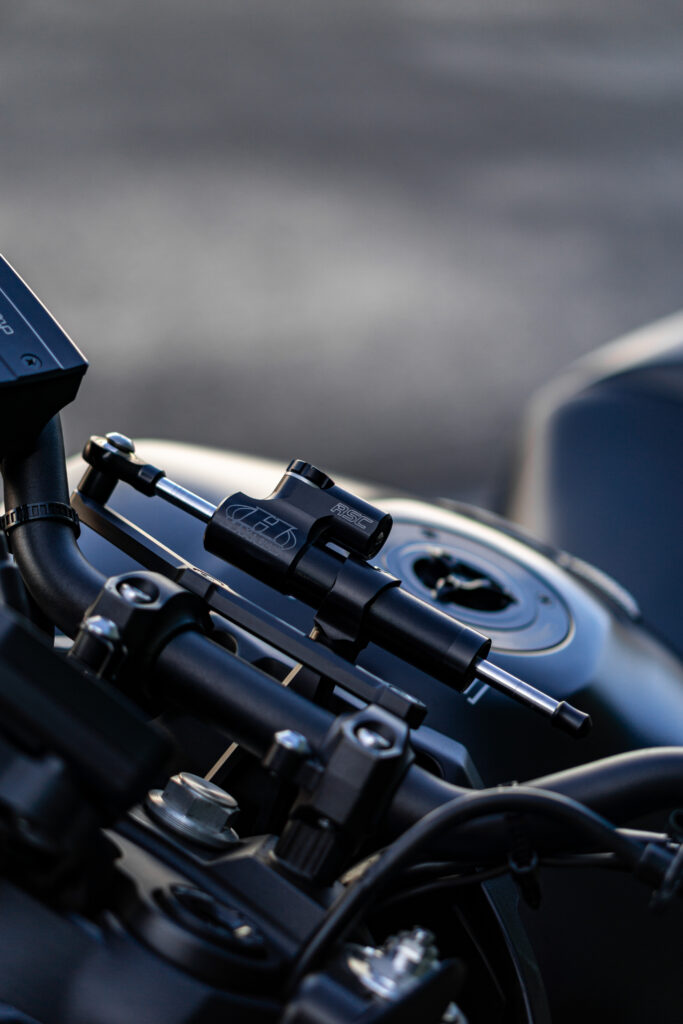
Some modern motorcycles do come with electronic steering dampers as standard equipment, though they remain relatively uncommon outside of high-performance sport and superbike segments. Manufacturers like Yamaha and Ducati have fitted electronic steering dampers to flagship models where high-speed stability demands more than a fixed mechanical unit can offer. The sections below break down how these systems work, what they offer, and whether an upgrade makes sense for your bike.
Which modern motorcycles come with electronic steering dampers?
Electronic steering dampers are currently found on a select group of high-performance motorcycles, primarily in the superbike and MotoGP-derived road bike category. Models such as the Yamaha YZF-R1 and certain Ducati Panigale variants have featured electronically controlled steering dampers as part of their advanced electronics packages. These are bikes where chassis dynamics at extreme speeds require adaptive damping that a fixed mechanical unit cannot deliver.
Outside of the top-tier sport segment, electronic steering dampers are rare. Most street bikes, adventure tourers, and naked middleweights ship from the factory with either a basic mechanical steering damper or no damper at all. The technology adds cost and complexity, so manufacturers reserve it for models where the performance justification is clear. If your bike sits outside the flagship superbike category, the chances are it left the factory without one.
Hyperpro
Ride with confidence
Find the nearest Hyperpro dealer and start your motorcycle upgrade.
How does an electronic steering damper work differently from a mechanical one?
A mechanical steering damper uses a fixed hydraulic cartridge to resist unwanted handlebar movement. It applies a constant level of damping regardless of speed, road conditions, or riding situation. An electronic steering damper, by contrast, uses sensors and a control unit to adjust damping force in real time, increasing resistance at high speed and reducing it at low speed to preserve steering agility.
The key difference is adaptability. A mechanical unit is set once and stays there. An electronic unit reads inputs such as vehicle speed, throttle position, and lean angle, then adjusts its damping response accordingly. At motorway speeds, where tank-slappers and wobbles are most dangerous, the damping firms up automatically. Filtering through traffic at low speed, the damping softens so the bars remain easy to turn. This dynamic response is what separates the two technologies in practical terms.
Most electronic steering dampers also integrate with the bike’s broader electronics suite, allowing the damping map to change depending on the selected riding mode. In a track or sport mode, the unit may apply stronger damping earlier in the speed range. In a touring or rain mode, it may prioritise light steering feel. This level of integration is simply not possible with a traditional mechanical steering damper.
What are the benefits of an electronic steering damper over a standard one?
The primary benefit of an electronic steering damper over a mechanical one is that it delivers the right level of damping at the right moment, without the rider needing to make manual adjustments. A mechanical damper forces a compromise: set it firm enough for high-speed stability and it fights you in slow corners; set it light enough for easy steering and it offers less protection when things go wrong at speed.
Electronic dampers remove that compromise. The main advantages include:
- Speed-sensitive damping: Resistance increases automatically as speed rises, providing stronger protection against wobbles and tank-slappers on fast roads.
- Preserved low-speed agility: Damping softens at low speeds, keeping the steering light and responsive in urban environments and tight corners.
- Riding mode integration: Damping maps can change with selected modes, matching the chassis setup to the rider’s intent.
- Reduced rider fatigue: Because the system adapts rather than resisting, riders do not fight against a stiff damper during everyday riding.
- Consistent performance: Electronic systems do not rely on manual clicker adjustments, reducing the chance of riding with an incorrectly set damper.
For high-performance bikes used in mixed conditions, from track days to long-distance touring, these benefits translate into measurable gains in both safety and comfort.
Can you retrofit an electronic steering damper to an older motorcycle?
Retrofitting a fully electronic steering damper to an older motorcycle is technically possible in some cases, but it is rarely straightforward. Genuine electronic dampers from factory systems depend on the bike’s CAN bus network and sensor inputs to function correctly. Connecting such a unit to an older motorcycle that lacks these systems requires significant electrical work and is generally not a practical upgrade path for most riders.
A more realistic and cost-effective retrofit option for older bikes is a high-quality adjustable mechanical steering damper. A well-designed adjustable unit gives you meaningful control over damping stiffness and delivers a significant improvement over no damper at all. For most riders upgrading an older street bike, adventure motorcycle, or naked bike, an adjustable mechanical damper covers the vast majority of real-world needs without the complexity of electronic integration.
You can browse the full range of suspension and damper products to find options suited to your specific model and riding style.
Should you upgrade to an aftermarket steering damper if your bike lacks one?
Yes, fitting an aftermarket steering damper to a motorcycle that lacks one is a worthwhile upgrade for most riders. Steering dampers reduce the risk of tank-slappers and handlebar wobbles, both of which can occur unexpectedly on uneven road surfaces, during hard braking, or after hitting a pothole at speed. Adding a damper improves confidence and control without changing the fundamental character of the bike.
The case for upgrading is strongest if you:
- Ride at higher speeds on motorways or open roads regularly
- Use your bike on imperfect road surfaces where surface irregularities are common
- Ride a sport or naked bike that sits low and forward, making the front end more sensitive to disturbances
- Have experienced even mild handlebar wobble or instability and want to address it proactively
For bikes that already have a basic mechanical damper fitted from the factory, upgrading to an adjustable aftermarket unit adds the ability to fine-tune damping to your weight, riding style, and preferred roads, something a fixed OEM unit cannot offer.
How Hyperpro helps you find the right steering damper
We design and manufacture steering dampers specifically for motorcycle riders who want better control and confidence without complicated installation. Our range covers two distinct damper types, each built to address real-world riding situations:
- CSC (Constant Safety Control): A linear damping model with 22 adjustable positions, giving you consistent resistance that you can tune to your riding conditions.
- RSC (Reactive Safety Control): A progressive damping model that increases resistance as handlebar movement intensifies, offering stronger protection when it matters most without stiffening normal steering input.
Both models are paired with CNC-milled, model-specific mounting kits available in Hyperpro Gold or Black. These kits are plug-and-play fitments that require no drilling or cutting in 98% of applications, meaning you get a clean, professional installation without modifying your frame or bodywork.
Purchases are available through our authorised distributor network. Contact us if you need guidance on the right damper for your specific model, or find your nearest dealer to get started.