


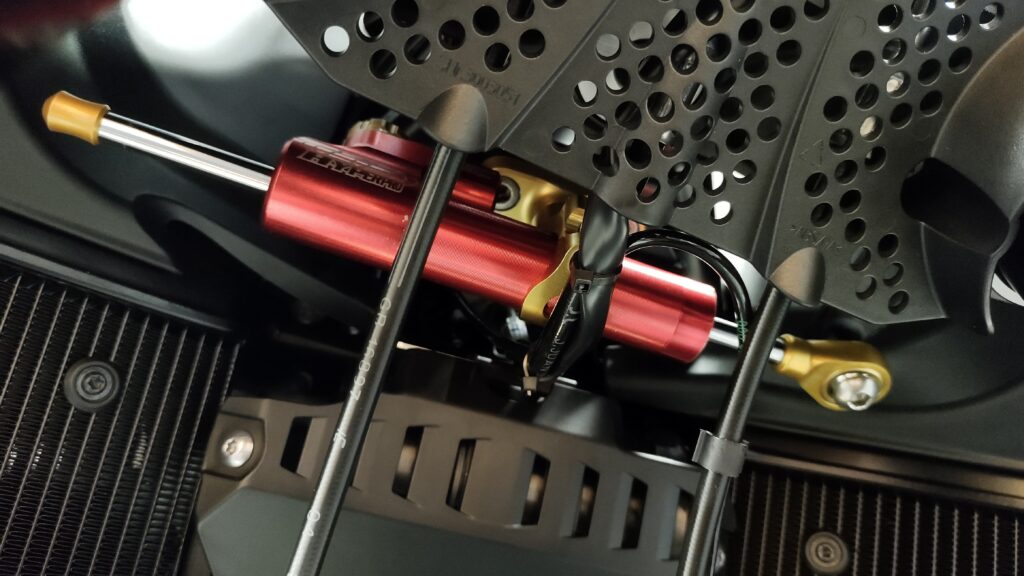
A tank slapper and a weave are two distinct types of motorcycle instability, and confusing them can cost you critical reaction time. A tank slapper is a rapid, violent oscillation of the front wheel from side to side, while a weave is a slower, rhythmic swaying of the entire motorcycle through the rear end. Both are dangerous, but they have different causes, different warning signs, and require different responses.
Understanding the difference matters most when you are riding at speed and something feels wrong. The sections below break down what triggers each phenomenon, how they compare, and what you can do to prevent or manage them.
What causes a tank slapper on a motorcycle?
A tank slapper occurs when the front wheel loses contact with the road surface and snaps back and forth uncontrollably once it lands. The most common trigger is a wheelie or a jump that causes the front end to go light, followed by a hard landing that sends the wheel into rapid oscillation. The handlebars whip from side to side so fast that a rider’s hands can literally be thrown off, which is how the name came about.
Several factors make a tank slapper more likely:
- Front wheel lift: Hard acceleration, cresting a hill, or landing from a jump all reduce front wheel contact, setting the stage for oscillation on landing.
- Insufficient steering damping: Without adequate resistance in the steering head, the wheel has nothing to slow down its oscillation once it starts.
- Worn or incorrect front tyre: A tyre that is underinflated, worn unevenly, or mismatched to the bike’s geometry contributes to instability on landing.
- Loose or worn steering head bearings: Play in the steering head allows the wheel to oscillate more freely than it should.
- Fork spring rate too soft: Overly soft fork springs allow excessive dive and rebound, which amplifies the wheel’s movement on landing.
Tank slappers are most common in sport and supermoto riding, but they can happen on any motorcycle under the right conditions. They develop and escalate in a fraction of a second, which is why prevention is far more effective than reaction.
Hyperpro
Ride with confidence
Find the nearest Hyperpro dealer and start your motorcycle upgrade.
What causes a weave on a motorcycle?
A weave is a side-to-side swaying motion that originates at the rear of the motorcycle and travels through the whole bike at a relatively slow, rhythmic frequency. Unlike a tank slapper, a weave does not require a triggering event like a jump or wheelie. It typically builds gradually as speed increases and can often be felt before it becomes visually obvious.
Common causes of weaving include:
- Rear suspension that is too soft: A shock absorber with insufficient spring rate or damping allows the rear end to wallow and sway, especially under load.
- Overloading or uneven loading: Heavy luggage, a passenger, or an unbalanced load raises the centre of gravity and makes the rear end less stable.
- Worn rear tyre: A tyre that is squared off from motorway riding or unevenly worn loses the profile it needs to track straight.
- Incorrect tyre pressure: An underinflated rear tyre deforms under load and creates a wandering sensation.
- Swingarm or linkage wear: Play in the rear suspension linkage allows movement that the shock absorber cannot control.
Weaving is particularly common on touring and adventure motorcycles that are ridden two-up or with full luggage, but it can appear on any bike where the rear suspension is not set up to match the actual riding conditions and load.
What’s the key difference between a tank slapper and a weave?
The key difference between a tank slapper and a weave is where the instability originates and how fast it develops. A tank slapper starts at the front wheel, oscillates extremely rapidly, and is almost always triggered by a sudden event. A weave starts at the rear of the bike, develops slowly, and tends to grow gradually with speed rather than appearing all at once.
Think of it this way: a tank slapper is violent and abrupt, while a weave is progressive and rhythmic. A tank slapper can escalate from nothing to a crash in under a second. A weave usually gives you several seconds of warning before it becomes unmanageable, provided you recognise what you are feeling.
The steering is also affected differently. During a tank slapper, the handlebars are the primary moving part and can feel completely out of control. During a weave, the handlebars may feel vague or lazy, but the more noticeable sensation is the rear end swinging from side to side beneath you.
Which is more dangerous, a tank slapper or a weave?
A tank slapper is generally more dangerous than a weave because it escalates faster, gives the rider almost no reaction time, and can physically throw the rider’s hands off the bars. At motorway speeds, a fully developed tank slapper can result in a crash within one or two oscillations if no steering damper is present.
A weave is still a serious hazard, particularly at high speed or when carrying a passenger, but it typically develops slowly enough that a calm, experienced rider can manage it. The danger with a weave increases significantly if the rider panics, applies the brakes hard, or makes sudden steering inputs, all of which can push the bike past the point of recovery.
In practical terms, both deserve respect and prevention. A tank slapper is more likely to be instantly catastrophic, while a weave is more likely to be manageable if you know what to do.
How does suspension setup affect tank slappers and weaves?
Suspension setup directly influences both tank slappers and weaves. Incorrect spring rates, damping settings, and worn components create the conditions in which both types of instability develop and worsen. Getting your suspension matched to your weight, riding style, and load is one of the most effective steps you can take to reduce the risk of either.
Front suspension and tank slappers
Fork springs that are too soft allow the front end to dive excessively under braking and rebound too quickly after a landing. This rapid rebound is what feeds a tank slapper. Upgrading to progressive-rate fork springs with the correct rate for your weight helps the front end absorb impacts and return to neutral more predictably, reducing the likelihood of oscillation. Adequate rebound damping in the forks is equally important.
Rear suspension and weaves
A rear shock absorber that cannot support the actual load on the bike will allow the rear end to wallow. Setting the correct preload for your weight and load, and adjusting rebound damping so the shock does not return too quickly after a bump, keeps the rear wheel tracking straight and stable. Riders who frequently carry luggage or a passenger should set up their suspension specifically for that condition rather than assuming the factory setting covers all scenarios. You can explore Hyperpro’s suspension range to find components matched to your specific model and riding conditions.
How should you react if your motorcycle starts to weave or tank slap?
If your motorcycle starts to weave, the correct response is to relax your grip, hold a steady throttle, and avoid sudden braking or steering corrections. Gradually reduce speed by rolling off the throttle smoothly. Do not grab the brakes, as this shifts weight and can destabilise the rear further. Once the speed drops below the threshold where the weave is active, the bike will typically settle.
If your motorcycle enters a tank slapper, the response is different and far more difficult to execute:
- Do not fight the bars: Gripping the handlebars tightly and trying to force them straight will not work and can make the oscillation worse. Keep your grip firm but not rigid.
- Hold the throttle steady or roll off very gently: A sudden throttle change shifts weight and can amplify the oscillation.
- Keep your body weight forward: Leaning forward loads the front wheel and helps damp the oscillation by increasing the tyre’s contact with the road.
- Do not brake hard: Hard front braking during a tank slapper is extremely likely to cause a crash. If you need to slow down, use the rear brake gently.
The honest reality is that a severe tank slapper at speed is extremely difficult to recover from without a steering damper fitted. A steering damper provides resistance to rapid oscillation and can turn a crash into a manageable scare. It is the single most effective hardware solution for reducing tank slapper risk.
How Hyperpro helps you prevent tank slappers and weaves
We design suspension components specifically to address the root causes of both tank slappers and weaves. Our approach is model-specific and technically grounded, meaning you get parts that are built for your exact motorcycle rather than generic aftermarket components that require guesswork.
Here is what we offer that directly reduces your risk:
- Progressive-rate fork springs: Matched to your bike model and rider weight, these reduce the excessive rebound that feeds tank slappers after front wheel lift or hard landings.
- Rear shock absorbers: Properly rated for your load and riding style, keeping the rear end stable and reducing the conditions that cause weaving.
- CSC and RSC steering dampers: Both models are adjustable across 22 positions. The CSC provides constant linear damping, while the RSC uses progressive damping that responds proportionally to the severity of the steering input. Both are designed to interrupt a tank slapper before it escalates. Our model-specific mounting kits are CNC-milled and fit as plug-and-play solutions with no drilling or cutting required in 98% of applications.
Purchases are always made through our authorised distributor network. Find a dealer near you or contact us if you have questions about which components are right for your motorcycle.