


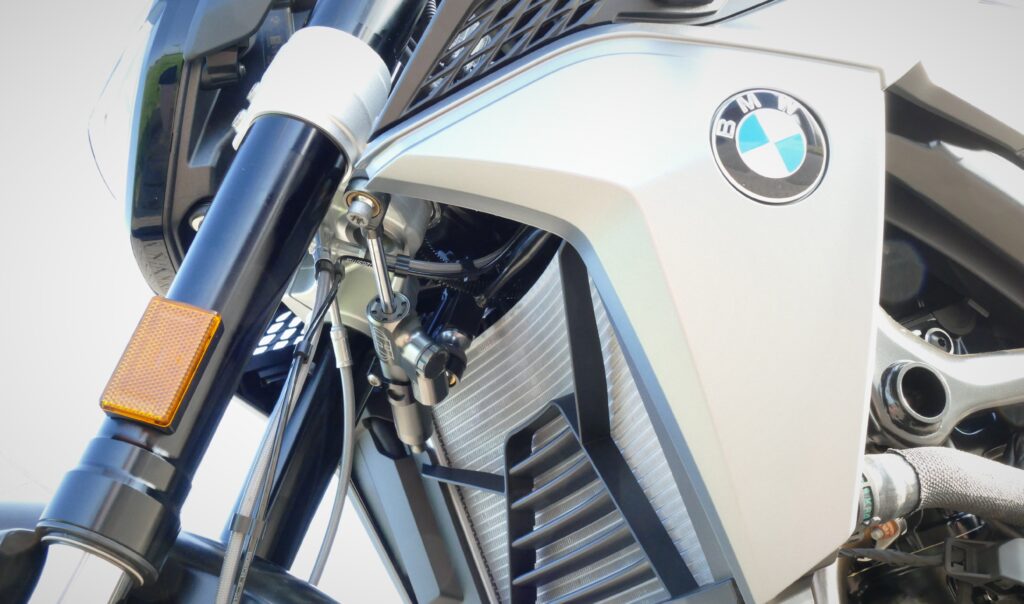
Yes, a mechanic can absolutely install a steering damper for you. Most experienced motorcycle mechanics handle this job without difficulty, provided they have access to the correct model-specific mounting kit. The installation does not require specialist workshop equipment, but it does demand familiarity with your bike’s steering geometry and torque specifications. The sections below answer the most common questions riders have before booking the job.
What does installing a steering damper actually involve?
Installing a steering damper involves mounting the damper body and its bracket to the motorcycle’s frame and steering stem, then connecting the unit so it moves in sync with the handlebars. The work typically includes removing the front fairing or handlebars if necessary, fitting the mounting hardware, attaching the damper, and adjusting the damping level to suit the rider’s preference.
The process varies depending on the bike model and the type of damper being fitted. A linear damper works at a constant resistance rate, while a progressive model adjusts its resistance based on how fast the steering input moves. Both types require the same basic installation steps, but the final setup and adjustment differ.
The mounting kit is the part of the job that demands the most attention. A model-specific kit designed as a plug-and-play fitment makes the process significantly more straightforward. In most cases, no drilling or cutting is required. A generic bracket, by contrast, may require fabrication or modification, which adds time and introduces more room for error.
Can any motorcycle mechanic fit a steering damper?
Most competent motorcycle mechanics can fit a steering damper, but the quality of the result depends on their familiarity with front-end components and the availability of a proper mounting kit. A mechanic who regularly works on sport or adventure bikes will typically be more comfortable with this job than one whose work is limited to routine servicing.
Hyperpro
Ride with confidence
Find the nearest Hyperpro dealer and start your motorcycle upgrade.
What separates a good installation from a poor one is attention to the following points:
- Correct torque settings on all fasteners connected to the steering stem and frame
- Full range of steering movement confirmed after fitting, with no binding or restriction from lock to lock
- Proper alignment of the damper rod so it operates parallel to the steering axis
- Damping adjustment set to a baseline level appropriate for street or track use
If you are unsure whether your regular mechanic has experience with steering damper installation, ask directly. A confident mechanic will tell you what they need to know about your bike before they start.
How long does a professional steering damper installation take?
A professional mechanic fitting a steering damper with a model-specific mounting kit typically completes the job in one to two hours. If partial disassembly is required, such as removing bodywork or the handlebar assembly, the job may extend to two to three hours. Fabricating a custom mount or sourcing missing hardware adds time beyond that.
The single biggest factor affecting installation time is whether the mounting kit is a direct fit for the bike. When the hardware is designed specifically for the model, the mechanic does not need to adapt anything. The brackets align immediately, the fastener positions are correct, and the damper body sits at the right angle without adjustment. This is the difference between a straightforward afternoon job and one that runs into complications.
Labour rates vary by workshop, so it is worth calling ahead to get an estimate once you confirm which damper and mounting kit you are bringing in.
What should you ask a mechanic before booking the job?
Before booking a steering damper installation, ask the mechanic whether they have fitted a damper on your specific model before, whether they are comfortable working with aftermarket mounting hardware, and what their process is for verifying full steering lock after fitting. These three questions give you a clear picture of their experience and approach.
Additional questions worth raising before the appointment:
- Do you need the mounting kit supplied by me, or can you source it? In most cases, you will need to purchase the damper and kit through an authorised distributor and bring it to the workshop.
- Will you check for steering restriction after fitting? This is a safety step that should never be skipped.
- What torque specifications will you use on the steering stem hardware? A mechanic who answers this confidently is one who takes the job seriously.
- Will you set the damping adjustment before I collect the bike? A good mechanic will set a sensible baseline rather than leaving it at maximum or minimum.
Bringing the product documentation with you is also a practical step. Most quality steering dampers come with installation instructions and recommended torque values, and handing these to the mechanic removes any ambiguity.
Is DIY installation a realistic alternative to using a mechanic?
DIY installation of a steering damper is realistic for riders who are comfortable working on their own motorcycles and have basic mechanical tools. With a model-specific plug-and-play mounting kit, no specialist equipment is needed in the majority of cases. The job becomes more demanding if partial disassembly is required or if the rider is unfamiliar with torque specifications on steering components.
Riders who have previously replaced their own brake pads, adjusted suspension preload, or fitted aftermarket handlebars will generally find a steering damper installation manageable. The steps are logical and the hardware is not complex. The areas that require the most care are:
- Applying the correct torque to steering stem fasteners
- Confirming full steering lock in both directions without restriction
- Routing any adjustment cables or wiring away from moving parts
Riders who are less confident with front-end work, or who have a more complex bike with integrated electronics, will benefit from having a professional handle the job. A steering damper directly affects how the front wheel responds, so any doubt about the quality of the installation is a good reason to use a workshop.
How Hyperpro helps with steering damper installation
We design our steering dampers and mounting systems specifically to make professional and DIY installation as straightforward as possible. Here is what we offer to support you through the process:
- Model-specific mounting kits in Hyperpro Gold or Black, CNC-milled and designed as plug-and-play fitments with no drilling or cutting required in 98% of applications
- Two damper levels to match your riding style: the CSC (Constant Safety Control) linear model and the RSC (Reactive Safety Control) progressive model, both adjustable across 22 positions
- A full product catalogue covering a wide range of motorcycle models, so you can find the right combination of damper and hardware for your bike
- Clear technical documentation included with every product to support both mechanics and riders installing the unit themselves
You can browse our full product range to find the right steering damper for your motorcycle. Purchases are made through our authorised distributor network. If you have a question about fitment or compatibility before buying, contact us and we will point you in the right direction.