


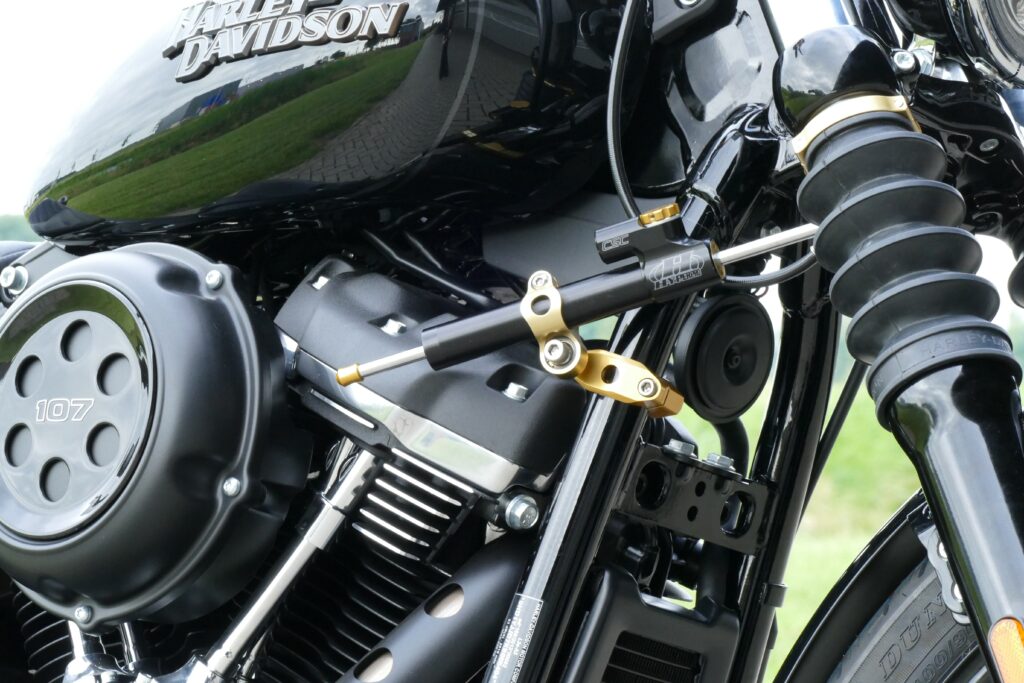
A steering damper typically lasts between 20,000 and 40,000 miles, though many riders get more life out of a well-maintained unit. Lifespan depends heavily on riding conditions, maintenance habits, and the quality of the damper itself. The sections below cover the key factors that affect longevity, the warning signs to watch for, and how to decide between a rebuild and a full replacement.
What affects how long a steering damper lasts?
Riding conditions, maintenance frequency, and build quality are the three main factors that determine how long a steering damper lasts. A damper used primarily on smooth tarmac will outlast one that regularly absorbs the stress of off-road tracks, cobblestones, or high-speed vibration. The internal seals and oil are the components most vulnerable to wear over time.
Several specific factors accelerate or slow down that wear:
- Riding style: Aggressive, high-speed riding puts more load on the damper mechanism than relaxed touring.
- Road surface quality: Rough roads, gravel, and uneven surfaces increase stress on the unit’s internal components.
- Exposure to the elements: Prolonged exposure to moisture, road grime, and extreme temperatures degrades seals faster.
- Mounting quality: A poorly fitted damper experiences uneven stress. Proper, model-specific mounting keeps load distribution even and extends service life.
- Adjustment settings: Running a damper at maximum stiffness all the time puts more strain on the internals than using a setting appropriate for your riding conditions.
Build quality plays an equally important role. A precision-engineered damper with quality seals and hydraulic fluid will hold up far longer than a budget unit under the same conditions.
Hyperpro
Ride with confidence
Find the nearest Hyperpro dealer and start your motorcycle upgrade.
What are the signs that a steering damper needs replacing?
The clearest signs that a steering damper needs attention are visible oil leaks, a noticeable change in steering feel, and the return of wobbles or tank-slappers that the damper previously controlled. Any of these symptoms means the unit is no longer doing its job and warrants immediate inspection.
Watch for these specific warning signs:
- Oil seeping from the body or rod: Leaking hydraulic fluid is one of the most obvious indicators that internal seals have failed.
- Steering feels too light or too heavy: If the resistance is inconsistent or has changed noticeably, the damping mechanism may be compromised.
- Wobbles or headshake returning: If you start experiencing the kind of instability the damper was installed to prevent, the unit is losing its effectiveness.
- Physical damage to the body or mounting points: Dents, cracks, or bent components affect performance and can compromise safety.
- Adjustment no longer makes a difference: If changing the settings produces no perceptible change in steering feel, the internal mechanism may be worn out.
Do not ignore these signs. A failing steering damper removes an important layer of control, particularly at higher speeds where instability develops quickly.
How many miles or years should a steering damper last?
A quality steering damper should last between 20,000 and 40,000 miles under normal riding conditions, which typically translates to roughly three to seven years for an average rider. Heavy use, aggressive riding, or poor maintenance can shorten that range significantly, while careful upkeep can extend it well beyond the upper estimate.
These figures are a useful benchmark rather than a hard rule. A rider covering 10,000 miles per year on mixed road surfaces will likely reach the inspection threshold faster than a weekend rider doing 3,000 miles annually on smooth roads. The type of riding matters as much as the mileage total.
Rather than relying solely on mileage, build a habit of checking the damper visually at every service interval. Look for oil residue around the seals, inspect the rod for scoring, and pay attention to any change in steering behavior. Catching wear early gives you the option to rebuild rather than replace, which is both more cost-effective and less disruptive.
Does a steering damper require regular maintenance?
Yes, a steering damper does require regular maintenance, though it is less demanding than other suspension components. The key tasks are periodic visual inspection, checking the mounting hardware for tightness, and monitoring for oil leaks. Some dampers also benefit from occasional oil replacement, depending on the design and manufacturer guidance.
A practical maintenance routine looks like this:
- Every ride: Do a quick visual check for leaks or physical damage, especially after off-road use or a hard ride.
- Every service interval: Inspect the rod for scoring or corrosion, check that all mounting bolts are torqued correctly, and clean away any accumulated grime.
- Annually or every 10,000 miles: Evaluate overall damper performance. If the feel has changed or adjustment range seems reduced, arrange a professional inspection.
Keeping the damper clean is more important than many riders realize. Road grime that works its way into the seal area accelerates wear. A quick wipe-down after muddy or wet rides extends seal life noticeably.
When should you replace a steering damper versus rebuild it?
Rebuild a steering damper when the seals are worn but the body, rod, and internal valving are still in good condition. Replace it entirely when there is physical damage to the body, the rod is scored or bent, the valving is compromised, or the unit is old enough that rebuilding would only delay an inevitable replacement by a short time.
The decision comes down to the condition of the core components:
- Rebuild makes sense when: Only the seals or fluid need attention, the damper body is undamaged, and the unit is relatively recent. A rebuild restores full function at a lower cost than replacement.
- Replacement makes sense when: The rod is scratched or bent, the body is dented or cracked, the internal valving is worn, or the damper has already been rebuilt once and is showing wear again.
Age is also a factor. If your damper is approaching or beyond the upper end of its expected service life, a rebuild may not be the most practical investment. A new unit gives you a full service life ahead rather than an uncertain extension of an aging one.
How Hyperpro helps you get the most from your steering damper
We design our steering dampers to deliver long service life alongside consistent, adjustable performance. Whether you ride a street bike, a sport machine, or an adventure motorcycle, we offer a solution matched to your setup:
- CSC (Constant Safety Control): A linear damping model with 22 adjustment positions, providing steady, predictable resistance across all steering inputs.
- RSC (Reactive Safety Control): A progressive damping model with 22 positions that reacts to the speed and force of steering movement, offering more nuanced control in dynamic situations.
- Model-specific mounting kits: Our CNC-milled mounting kits are designed as plug-and-play fitments for specific bike models. In 98% of applications, no drilling or cutting is required, which means a clean, precise installation that puts no unnecessary stress on the damper or the frame.
A correctly fitted damper lasts longer and performs better from the first ride. You can explore our full range of suspension products to find the right fit for your motorcycle. Purchases are made through our authorized distributor network. Contact us if you have questions about which system suits your bike.