


Yes, hitting a bump at speed can trigger a tank slapper, but the bump alone is rarely the whole story. A tank slapper happens when the front wheel deflects off an obstacle and the handlebars begin oscillating rapidly from side to side, faster than the rider can correct. Speed amplifies how violently the wheel rebounds, and a poorly set-up suspension makes it far more likely that a single bump becomes a full oscillation cycle.
Understanding what actually drives this phenomenon, and how to reduce your exposure to it, can make a real difference to your confidence and safety on the road. The sections below break down each piece of the puzzle.
What actually triggers a tank slapper on a motorcycle?
A tank slapper is triggered when the front wheel loses traction or is deflected sideways, and the steering geometry cannot self-correct quickly enough. The handlebars then oscillate left and right in rapid succession, sometimes violently enough to throw the rider off. The root cause is a temporary mismatch between where the wheel is pointing and where the bike is travelling.
Several factors can set this off. A sharp bump, a patch of gravel, a mid-corner braking event, or even a wheelie landing can all introduce that initial deflection. Once the front end starts oscillating, the bike’s natural steering geometry tries to self-correct, but if the damping in the system is insufficient, the correction overshoots, the wheel swings the other way, and the cycle escalates rather than settles.
Rider input matters here too. Gripping the bars tightly during the wobble can feed energy into the oscillation rather than absorbing it. A relaxed but firm grip gives the steering the freedom to self-correct while keeping the rider in control.
Hyperpro
Ride with confidence
Find the nearest Hyperpro dealer and start your motorcycle upgrade.
Does speed make a bump more likely to cause a tank slapper?
Speed significantly increases the risk that a bump will escalate into a tank slapper. At higher speeds, the front wheel has less time to track back into line after deflection, the forces involved are larger, and the oscillation frequency increases. What might be an annoying shimmy at 60 km/h can become a violent wobble at 130 km/h.
The physics behind this are straightforward. When a wheel strikes a bump at speed, the lateral force it experiences is much greater, and the rebound happens faster. If the suspension cannot absorb and dissipate that energy quickly enough, the excess energy stays in the system and drives the oscillation. The higher the speed, the more energy enters the system and the harder it is for the steering geometry to self-correct within each oscillation cycle.
This is why tank slappers are disproportionately associated with high-speed riding, motorway travel, and sport riding near the limit. It is not that bumps are more common at speed, but that the consequences of hitting one are far more severe when the bike is travelling fast.
How does suspension setup affect tank slapper risk?
Suspension setup has a direct and significant effect on tank slapper risk. A suspension that is too soft, too stiff, or incorrectly sprung for the rider’s weight allows the front wheel to deflect and rebound in ways that feed oscillation. Correct spring rate and damping keep the wheel in contact with the road and allow deflection energy to be absorbed rather than transferred into the steering.
Fork springs that are too soft for the rider’s weight will compress excessively on impact and then rebound sharply, launching the front wheel off the surface. Springs that are too stiff transmit the bump force directly into the chassis without absorbing it. In both cases, the wheel loses its stable contact patch and the conditions for a tank slapper are created.
Damping settings are equally important. Rebound damping controls how quickly the fork extends after compression. Too little rebound damping and the fork springs back rapidly, flicking the wheel upward. Too much and the fork stays compressed, reducing ground contact on the next bump. Finding the right balance for your riding style, weight, and road conditions is what separates a well-set-up suspension from a factory default that was designed for an average rider in average conditions.
Riders looking to address this at the component level can explore motorcycle suspension upgrades that are matched to their specific bike and weight.
What’s the difference between a tank slapper and a speed wobble?
A tank slapper and a speed wobble are closely related but not identical. A speed wobble is a sustained oscillation of the front wheel and steering assembly, typically triggered by speed alone or by aerodynamic instability. A tank slapper is generally more sudden and violent, triggered by a specific event such as a bump, a wheelie landing, or a sudden loss of traction.
In practice, the two can merge. A speed wobble that goes unchecked can intensify into a tank slapper, and a tank slapper that is not corrected quickly can settle into a sustained speed wobble. The key mechanical difference is the trigger: speed wobbles tend to build gradually as speed increases past a threshold, while tank slappers have a clear initiating event.
Both phenomena involve the same underlying instability: the front wheel oscillating faster than the steering geometry and rider can correct. The distinction matters mainly for diagnosis. If your bike wobbles at a consistent speed without hitting anything, the cause is likely a balance, geometry, or tyre issue. If it happens suddenly after a bump or obstacle, the suspension and steering damping are the first places to investigate.
How should a rider respond when a tank slapper starts?
When a tank slapper starts, the most important thing a rider can do is relax their grip on the handlebars, keep their body weight centred, and avoid braking sharply or accelerating aggressively. Counterintuitively, fighting the bars by gripping tightly makes the oscillation worse. Letting the steering move while staying stable on the bike gives the geometry the best chance to self-correct.
Here is what to focus on in the moment:
- Loosen your grip: Tight hands feed energy into the oscillation. A firm but relaxed grip allows the bars to find their own correction path.
- Stay centred: Keep your weight over the centre of the bike. Leaning or shifting your body can add asymmetric forces that extend the wobble.
- Avoid sudden braking: Hard braking during a tank slapper transfers weight forward and can amplify the front-end instability dramatically.
- Reduce speed gradually: If the wobble does not self-correct within a second or two, roll off the throttle smoothly to reduce speed without upsetting the balance further.
- Look ahead: Focusing on the road ahead rather than the bars helps you stay composed and gives the bike space to stabilise.
Most tank slappers that do not result in a crash are resolved by the rider doing less, not more. The instinct to fight the bars is natural but counterproductive.
Can aftermarket suspension components prevent tank slappers?
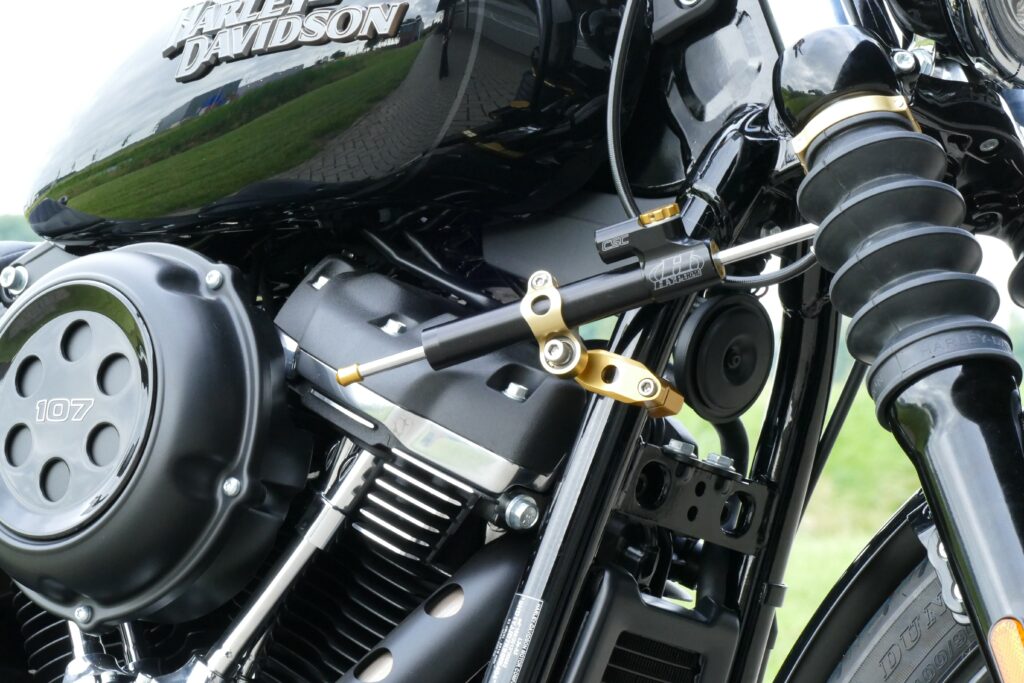
Aftermarket suspension components can substantially reduce the likelihood of a tank slapper, though no single component eliminates all risk. The most direct solution is a steering damper, which adds resistance to rapid steering oscillations without interfering with normal steering input. Upgraded fork springs and shock absorbers improve how the bike handles bumps in the first place, reducing the initial deflection that starts the chain of events.
Progressive-rate fork springs are particularly relevant here. Unlike linear springs, which offer the same resistance throughout their travel, progressive springs become stiffer as they compress. This means they absorb small bumps softly while resisting the bottoming out and sharp rebound that contributes to tank slappers at speed.
How we help you ride with more control
We design and manufacture suspension components specifically to address the instability that causes tank slappers and speed wobbles. Our product range covers the key areas that matter:
- Steering dampers: We offer two models, the CSC (Constant Safety Control) with linear damping and the RSC (Reactive Safety Control) with progressive damping. Both are adjustable across 22 positions and reduce oscillation without interfering with normal steering feel.
- Model-specific mounting kits: Our CNC-milled mounting kits are designed as plug-and-play fitments for specific bike models, requiring no drilling or cutting in 98% of applications. They are available in Hyperpro Gold or Black.
- Progressive fork springs and shock absorbers: Matched to your bike model and rider weight, these components improve how your suspension absorbs bumps and rebounds, reducing the deflection energy that can escalate into a tank slapper.
All purchases are made through our authorised distributor network. If you want to find the right setup for your bike or have a question about fitment, contact us directly and we will point you in the right direction.