


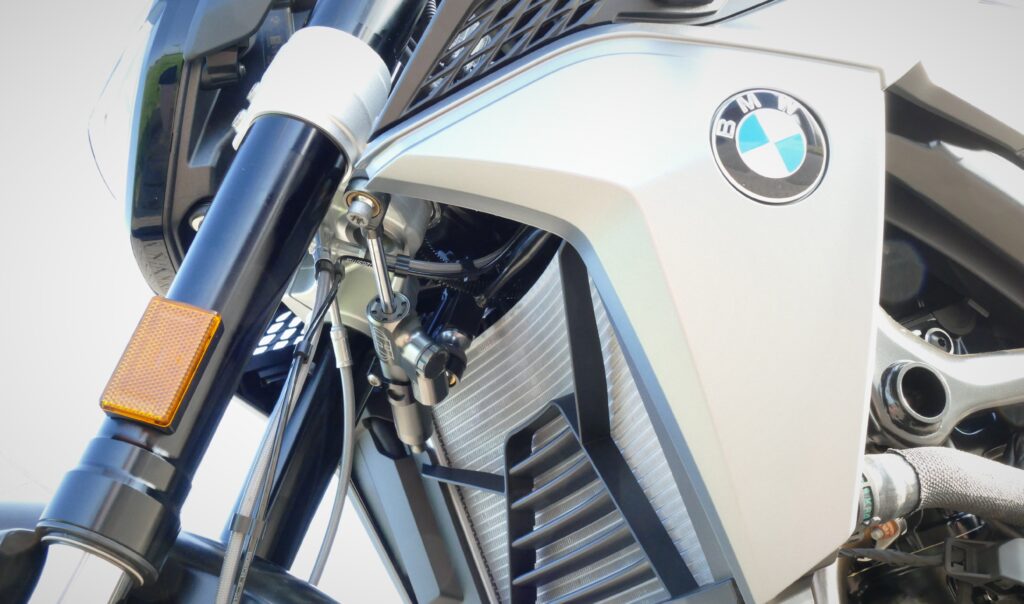
In most cases, no. A steering damper is not a plug-and-play component you can freely move between different motorcycle models. While the damper unit itself may be physically transferable, the mounting hardware is almost always bike-specific, meaning a damper set up for one model will not fit another without significant modification or a dedicated adapter kit.
That said, the damper body can sometimes be reused across compatible models when the correct model-specific mounting kit is available for each bike. The key variable is always the mounting system, not the damper itself. The sections below answer the most common questions riders have about steering damper compatibility in detail.
Does a steering damper need to be bike-specific?
Yes, a steering damper setup needs to be bike-specific in terms of its mounting configuration. Every motorcycle has a unique frame geometry, steering head design, and handlebar layout, which means the brackets and mounting points that attach the damper to the bike must be engineered for that exact model. The damper body may be a standardized unit, but the mounting hardware is not.
This is why reputable suspension manufacturers develop model-specific mounting kits rather than relying on a one-size-fits-all bracket system. Mounting geometry directly affects the damper’s range of motion, its angle relative to the steering axis, and how effectively it absorbs wobble and tank-slapper forces. A damper mounted at the wrong angle or with incorrect leverage geometry will either underperform or interfere with steering in ways that reduce rather than improve safety.
Fitment also affects the damper’s stroke length and travel. If the mounting positions do not match the bike’s steering sweep, the damper may bottom out or run out of travel before the steering reaches its lock, which can cause dangerous handling characteristics.
Hyperpro
Ride with confidence
Find the nearest Hyperpro dealer and start your motorcycle upgrade.
What happens if you fit the wrong steering damper to a bike?
Fitting an incompatible steering damper to your motorcycle can create serious safety risks. If the mounting geometry is incorrect, the damper may restrict steering lock, create binding through the steering range, or fail to damp wobble at the right moment. In the worst cases, a poorly fitted damper can actively destabilize the bike rather than protect the rider.
Beyond the safety implications, a mismatched damper will wear unevenly and may place stress on mounting points that are not designed to handle the loads involved. This can lead to bracket failure, particularly under hard braking or at high speed when damping forces are at their greatest.
There is also the issue of damping effectiveness. A steering damper works by resisting rotational movement around the steering axis within a specific mechanical range. If the mounting positions place the damper at the wrong leverage angle, it may feel functional during slow maneuvers but provide little real resistance when a tank-slapper develops at speed. That false sense of security is arguably more dangerous than riding without a damper at all.
Are any steering dampers truly universal across motorcycle models?
No steering damper is truly universal across all motorcycle models. While some manufacturers market damper bodies as compatible with a broad range of bikes, this compatibility always depends on the availability of the correct mounting hardware for each individual model. The damper unit itself cannot be universal because it must integrate with geometry that varies significantly from one motorcycle to the next.
Some damper bodies are designed to be adaptable, meaning the same core unit can be paired with different mounting kits to suit multiple bikes. This is a practical approach that keeps costs manageable for riders who switch bikes, but it still requires a verified, model-specific mounting solution for every application. Claiming a damper is “universal” without specifying the mounting system is a red flag when evaluating products.
The variables that make true universality impossible include:
- Steering head diameter and clamp compatibility
- Frame mounting point location and thread specification
- The steering sweep angle and how it maps to the damper’s stroke
- Handlebar and triple clamp design
- Available clearance around the front end
Each of these factors differs between manufacturers, model generations, and even trim levels of the same bike.
Can the same steering damper fit different bikes with adapter kits?
Yes, the same steering damper body can often be used on different motorcycles when the correct adapter or mounting kit is available for each model. This approach lets you reuse the damper unit when you change bikes, provided a compatible mounting kit exists for your new motorcycle. The damper body stays the same; the mounting hardware changes.
This is a cost-effective option for riders who upgrade their motorcycle regularly or who own multiple bikes. Rather than purchasing a complete new damper system for each bike, you invest in the damper once and source the appropriate mounting kit for each application. The important qualifier is that the mounting kit must be specifically engineered for the target model. Generic or improvised adapters introduce the same risks as a fully mismatched setup.
When evaluating this option, check that the mounting kit is designed as a plug-and-play fitment. Quality kits require no drilling, cutting, or permanent modification to the bike. CNC-milled, model-specific brackets that bolt directly to existing mounting points are the standard to look for. You can browse steering damper systems and kits to see which mounting options are available for your specific model.
How do you check steering damper compatibility before buying?
To check steering damper compatibility, start by identifying your exact motorcycle model, year, and variant, then use the manufacturer’s fitment guide or product catalog to confirm that a dedicated mounting kit exists for your bike. Never assume compatibility based on visual similarity or approximate measurements alone.
Here is a practical step-by-step approach:
- Confirm your bike’s exact specification. Include the model year and any variant differences (for example, ABS vs. non-ABS models sometimes have different front-end components that affect damper fitment).
- Use an official fitment tool or catalog. Reputable manufacturers maintain model-specific fitment databases. If your bike is listed with a dedicated mounting kit, compatibility is confirmed. If it is not listed, do not attempt to adapt a kit from a similar model.
- Check the mounting kit design. Look for CNC-milled, model-specific brackets that require no drilling or cutting. This indicates the kit was engineered for your bike rather than adapted from a generic solution.
- Verify damper stroke and travel. The damper’s stroke length must match your bike’s full steering lock-to-lock sweep. Confirm this in the product specification before purchasing.
- Contact the manufacturer if uncertain. If your model is not clearly listed or you have a modified bike, reach out directly to confirm compatibility before committing to a purchase.
Taking these steps before buying protects you from fitment issues and ensures the damper performs as intended from the first ride.
How Hyperpro helps you find the right steering damper
We design our steering damper systems specifically to address the compatibility challenges described above. Our range includes two damper models, the CSC (Constant Safety Control) with linear damping and the RSC (Reactive Safety Control) with progressive damping, both adjustable across 22 positions to suit different riding styles and conditions.
What sets our approach apart is the mounting system. We develop and manufacture CNC-milled, model-specific mounting kits for our dampers, available in Hyperpro Gold or Black. These kits are engineered as plug-and-play fitments for each supported motorcycle model, with no drilling or cutting required in 98% of applications. That means you get a confirmed, safe fit without compromising your bike’s frame or front-end components.
Here is what our system offers in practical terms:
- Two damper models covering a wide range of riding needs and budgets
- 22-position adjustability for fine-tuning damping resistance
- Model-specific mounting kits that bolt directly to existing mounting points
- Coverage across a broad range of street, sport, and adventure motorcycle models
- No permanent modification required in nearly all supported applications
You can explore our full range of suspension products to find the right combination for your motorcycle. Purchases are made through our authorized distributor network. If you have questions about compatibility for your specific model, contact us directly and we will point you in the right direction.