


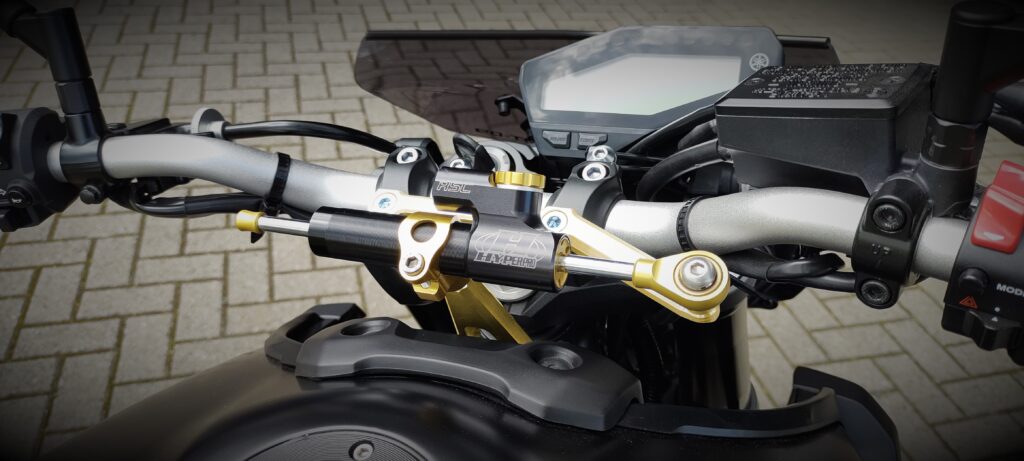
Hard braking can trigger handlebar shake, but it is rarely the direct cause on its own. The real issue is that aggressive braking shifts weight heavily onto the front wheel, and if the front suspension, steering geometry, or tyres are not properly set up, that weight transfer can excite instability in the front end. Riders who experience bar shake under braking are usually dealing with a combination of worn components, incorrect spring rates, or insufficient damping control. The sections below break down exactly what is happening and what you can do about it.
What actually causes handlebar shake on a motorcycle?
Handlebar shake on a motorcycle is caused by rapid, uncontrolled oscillation of the front wheel and steering assembly around the steering axis. This oscillation happens when the front end loses its ability to self-stabilise, usually because the forces acting on it exceed what the geometry and damping can manage. The result is a rhythmic, sometimes violent shaking of the bars that can range from a mild flutter to a full tank-slapper.
Several factors feed into this instability:
- Tyre condition and balance: A worn, unevenly loaded, or out-of-balance front tyre is one of the most common triggers. An irregular contact patch generates small lateral forces that the steering geometry cannot absorb.
- Steering head bearing wear: Loose or worn steering head bearings allow play in the steering assembly, removing the precision that keeps the front end tracking straight.
- Incorrect suspension setup: Springs that are too soft or too stiff for the rider’s weight and riding style, combined with inadequate damping, leave the front end vulnerable to oscillation.
- Aerodynamic disturbance: At higher speeds, crosswinds or turbulence from other vehicles can introduce lateral inputs that kick off a wobble cycle.
- Chassis flex: On some motorcycles, particularly older or heavily loaded bikes, frame flex under load can contribute to front-end instability.
Understanding which of these factors is at play on your bike is the first step towards solving the problem rather than simply tolerating it.
Can hard braking trigger a speed wobble?
Yes, hard braking can trigger a speed wobble. When you brake aggressively, the bike’s weight transfers sharply forward, compressing the front forks and loading the front tyre. If the front suspension bottoms out, the fork springs are too soft, or the damping is insufficient, the front end can momentarily lose composure and begin to oscillate. This is the braking-induced wobble that many riders describe as a handlebar shake.
The mechanism works like this: as the front forks compress under braking load, the steering geometry changes. The trail dimension, which is the distance between where the steering axis meets the ground and where the tyre contacts the road, shortens as the fork dives. Reduced trail makes the steering lighter and more prone to self-oscillation. If damping is not strong enough to suppress that tendency, a wobble can develop.
It is worth noting that a steering damper addresses exactly this scenario. By resisting rapid steering movement, a damper can interrupt the oscillation cycle before it builds into a dangerous wobble. However, a damper is not a substitute for correctly set-up suspension. It is a safety layer on top of a properly functioning front end.
Hyperpro
Ride with confidence
Find the nearest Hyperpro dealer and start your motorcycle upgrade.
What suspension faults make handlebar shake worse under braking?
Several specific suspension faults amplify handlebar shake during braking. The most common are worn or incorrectly weighted fork springs, insufficient compression damping, and degraded fork oil. Each of these allows the front end to move in ways that destabilise the steering rather than absorbing the braking forces cleanly.
Here are the faults that most frequently contribute to the problem:
- Soft or worn fork springs: Springs that have lost their rate over time, or that were never matched to the rider’s weight, allow excessive fork dive under braking. This dramatically reduces trail and makes the front end prone to oscillation.
- Low or degraded fork oil: Fork oil provides the damping that controls how quickly the springs compress and rebound. Old or low oil loses its viscosity, reducing damping effectiveness and allowing the fork to move too freely.
- Insufficient preload: Without enough spring preload, the fork sits too low in its travel at rest, leaving little reserve before it bottoms out under hard braking.
- Worn rebound damping: If the fork extends too quickly after compression, the front end can skip or chatter rather than tracking smoothly through a braking event.
- Loose axle clamps or wheel bearings: Mechanical looseness anywhere in the front wheel assembly introduces play that the suspension cannot compensate for, making any oscillation worse.
Addressing these faults systematically, starting with the most likely culprit for your bike and riding style, is more effective than replacing components at random.
How does fork spring rate affect front-end stability?
Fork spring rate directly determines how much the front forks compress under a given load. A spring rate that is too low for the rider’s weight and riding style allows the forks to dive excessively under braking, which reduces trail and makes the steering geometry unstable. A rate that is too high prevents the fork from absorbing road irregularities, which can cause the front tyre to skip rather than maintain consistent contact with the road.
Factory fork springs are designed around an average rider weight and a general-purpose riding style. If you are heavier than that average, ride aggressively, or carry luggage regularly, the standard springs are likely too soft for your situation. Progressive-rate springs address this by offering a softer initial response for comfort over small bumps and a firmer rate as the fork compresses further into its travel under braking or cornering loads.
The practical effect of the right spring rate under braking is that the fork compresses in a controlled, predictable arc rather than diving sharply and then bouncing back. This keeps the steering geometry within the range it was designed to operate in, which means the front end remains stable and the bars stay calm even under hard braking. Matching the spring rate to your actual weight and riding conditions is one of the highest-impact adjustments you can make to front-end stability.
Should you upgrade your suspension if your bars shake under braking?
Yes, you should investigate and likely upgrade your suspension if your bars shake under braking, because this is a safety issue, not just a comfort one. Handlebar shake under braking means the front end is not managing the braking forces predictably. In a genuine emergency stop, that instability can compromise your ability to control the bike at the moment you need control most.
Before spending money on upgrades, work through a basic diagnostic checklist:
- Check tyre condition, pressure, and balance.
- Inspect steering head bearings for play or roughness.
- Check fork oil level and condition.
- Verify that axle clamps and wheel bearings are tight and in good condition.
- Assess whether your fork springs are matched to your weight.
If the bike passes these checks but the problem persists, or if the components are worn and need replacing anyway, upgrading to correctly rated fork springs and fresh damping fluid is a logical and cost-effective step. For riders who frequently brake hard or ride at higher speeds, adding a steering damper provides an additional layer of protection against wobble in situations where the front end comes under sudden or unexpected stress.
How we help with handlebar shake and front-end stability
At Hyperpro, we develop suspension components specifically designed to address the kind of front-end instability that causes handlebar shake under braking. Our approach covers both the root cause and the safety layer:
- Progressive-rate fork springs: Matched to your specific bike model and designed to control fork dive under braking, keeping the steering geometry stable where it matters most.
- CSC steering damper (Constant Safety Control): A linear damping model adjustable in 22 positions, designed to resist rapid steering oscillation and reduce the risk of tank-slappers and wobbles.
- RSC steering damper (Reactive Safety Control): A progressive damping model, also adjustable in 22 positions, that responds proportionally to the speed and severity of steering movement for more dynamic riding situations.
- Model-specific mounting kits: CNC-milled kits designed as plug-and-play fitments for 98% of applications, requiring no drilling or cutting.
You can browse our full range of suspension upgrade products to find components matched to your bike. Purchases are made through our authorised distributor network. If you have questions about which setup is right for your riding situation, get in touch with us and we will point you in the right direction.