


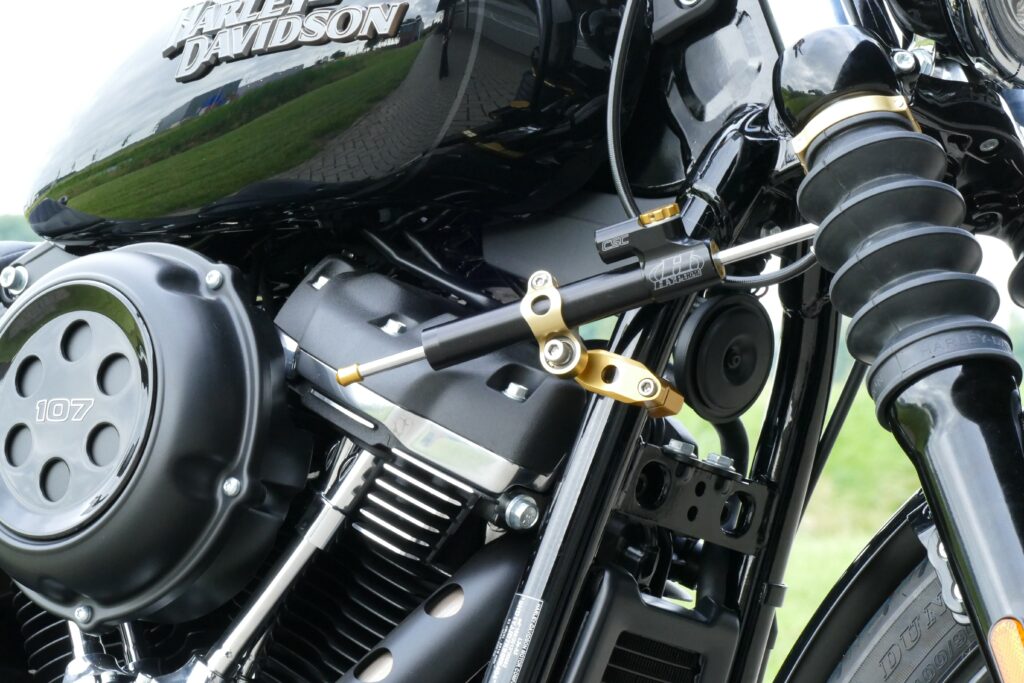
Yes, a steering damper can leak oil. Like any hydraulic component, a steering damper relies on sealed oil chambers to generate resistance and control handlebar movement. When those seals wear out, crack, or become damaged, oil can escape, reducing the damper’s ability to absorb wobbles and tank-slappers. Below, we cover every key question about steering damper oil leaks so you can act quickly and ride safely.
What causes a steering damper to leak oil?
A steering damper leaks oil when its internal seals fail or its housing is physically damaged. Seals are the most common cause. Over time, the rubber or polymer seals around the damper’s piston rod degrade due to heat cycles, UV exposure, and normal wear. Once a seal loses its elasticity, oil finds a path out. Physical damage to the damper body, such as a stone strike or a minor crash, can also crack the casing and cause an immediate leak.
Several factors accelerate seal degradation:
- Age and mileage: Seals have a finite service life. High mileage or years of use gradually harden and shrink them.
- Contamination: Dirt and grit that work their way past the wiper seal act as an abrasive on the main seal, wearing it down faster.
- Incorrect installation: A damper fitted at the wrong angle or with misaligned mounting points places an uneven side load on the rod, which accelerates seal wear on one side.
- Extreme temperature swings: Repeated heating and cooling causes seals to expand and contract, eventually leading to micro-cracks.
- Improper storage: Leaving a motorcycle unused for long periods, especially in cold or damp conditions, can cause seals to dry out and lose their sealing properties.
Understanding the root cause matters because it determines whether a leak is a one-off event or a sign of a deeper maintenance issue with the bike’s steering system.
Hyperpro
Ride with confidence
Find the nearest Hyperpro dealer and start your motorcycle upgrade.
How do you know if your steering damper is leaking?
The clearest sign of a leaking steering damper is visible oil residue on or around the damper body, particularly near the rod where it enters the housing. You might notice a wet, oily film along the shaft, oil droplets on the mounting bracket, or a greasy buildup of dirt and grime that sticks to the leaked fluid. A performance change, where the steering suddenly feels lighter or more vague than usual, is another strong indicator.
Here are the most reliable signs to check for:
- Oil film on the damper rod: Run a clean cloth along the rod. Any oily residue points to a failing seal.
- Dirt accumulation around the seal area: Leaked oil attracts road grime, creating a dark, sticky buildup near the rod exit point.
- Reduced damping feel: If tank-slappers or handlebar wobbles return after a period of controlled steering, the damper may have lost fluid volume and damping capacity.
- Inconsistent resistance: A damper that feels loose at one end of its travel and stiffer at the other may have air entering the chamber through a leaking seal.
- Oil on surrounding components: Check the frame, top yoke, and fork legs near the damper for oil traces that do not originate from the forks themselves.
Regular visual inspections, ideally at every service interval or after any off-road or rough-riding session, help you catch a leak early before it affects your safety on the road.
Is it safe to ride with a leaking steering damper?
Riding with a leaking steering damper is not safe, and you should address the issue before your next ride. A steering damper’s job is to absorb high-frequency wobbles and prevent tank-slappers, which are the sudden, violent handlebar oscillations that can cause a crash at speed. As oil leaks out, the damper loses its ability to resist those forces, leaving your steering progressively less controlled.
The risk increases with speed. At low urban speeds, a partially functioning damper may go unnoticed. On motorways or during fast cornering, the absence of proper damping can allow a minor wobble to escalate into a full tank-slapper before you have time to react. Motorcycles with steering dampers fitted are typically higher-performance or adventure bikes where the consequences of uncontrolled steering are severe.
Beyond the direct safety risk, continuing to ride with a leaking damper accelerates internal wear. What starts as a seal leak can develop into a damaged rod or scored internal surfaces, turning a straightforward repair into a full replacement.
Can a leaking steering damper be repaired or does it need replacing?
Whether a leaking steering damper can be repaired or must be replaced depends on the severity of the damage and the design of the unit. Many hydraulic dampers can be rebuilt with a seal kit if the rod and internal surfaces are undamaged. However, if the damper body is cracked, the rod is scored, or the internal valving has been compromised by running low on fluid, replacement is the more reliable and cost-effective option.
A few practical considerations help you decide:
- Age of the unit: An older damper with high mileage may have worn internal components beyond what a seal replacement can fix. Rebuilding it may only delay the next failure.
- Availability of rebuild parts: Not all manufacturers supply seal kits for their dampers. If rebuild components are unavailable, replacement is the only option.
- Cost comparison: In some cases, a quality replacement damper costs only marginally more than a professional rebuild, making replacement the smarter long-term investment.
- Rod condition: A scored or pitted rod will destroy a new seal quickly. If the rod surface is damaged, the entire damper needs replacing.
If you are unsure, have a qualified motorcycle technician inspect the unit. Attempting a seal replacement without the right tools and knowledge can introduce air into the system or damage the new seals during installation.
How long should a steering damper last before it starts leaking?
A well-maintained steering damper should last between 30,000 and 60,000 kilometres before seal wear becomes a concern, though this range varies significantly based on riding conditions, maintenance habits, and the quality of the unit. Dampers used on adventure bikes that see rough terrain or heavy vibration will wear seals faster than those on road bikes used primarily on smooth tarmac.
Several factors influence actual service life:
- Riding environment: Gravel, dirt, and high-vibration surfaces increase the workload on the damper and accelerate seal wear.
- Maintenance: Keeping the damper clean, especially around the rod and seal area, prevents abrasive contamination from shortening seal life.
- Adjustment habits: A damper that is consistently set to maximum stiffness works harder and generates more heat, which degrades seals faster.
- Storage conditions: Long periods of inactivity, particularly in cold or damp environments, can dry out seals and cause premature failure.
Inspecting your steering damper at every major service and after any crash or hard impact gives you the best chance of catching seal wear before it becomes a leak. If your damper is approaching high mileage or showing early signs of weeping oil, proactive replacement is a sensible choice rather than waiting for a full failure.
How Hyperpro helps with steering damper reliability
At Hyperpro, we design steering damper systems built for long service life and consistent performance. If your current damper is leaking or no longer delivering the control you need, our range offers a direct, high-quality solution:
- CSC (Constant Safety Control): A linear damping model with 22 adjustable positions, designed to reduce wobbles and vibrations across a wide range of riding conditions.
- RSC (Reactive Safety Control): A progressive damping model with 22 adjustable positions that responds dynamically to steering input, offering more natural steering feel at low speeds and stronger protection at high speeds.
- Model-specific mounting kits: CNC-milled, plug-and-play brackets available in Hyperpro Gold or Black, requiring no drilling or cutting in 98% of applications.
- Broad fitment range: Our full product range covers street, sport, and adventure motorcycles, with bike-specific fitment guides to help you select the right unit.
Ready to upgrade to a steering damper that lasts? Find your nearest authorised Hyperpro dealer via our contact page and get the right unit fitted correctly from the start. Purchases are always handled through our official distributor network to ensure you receive a genuine product with full support.