


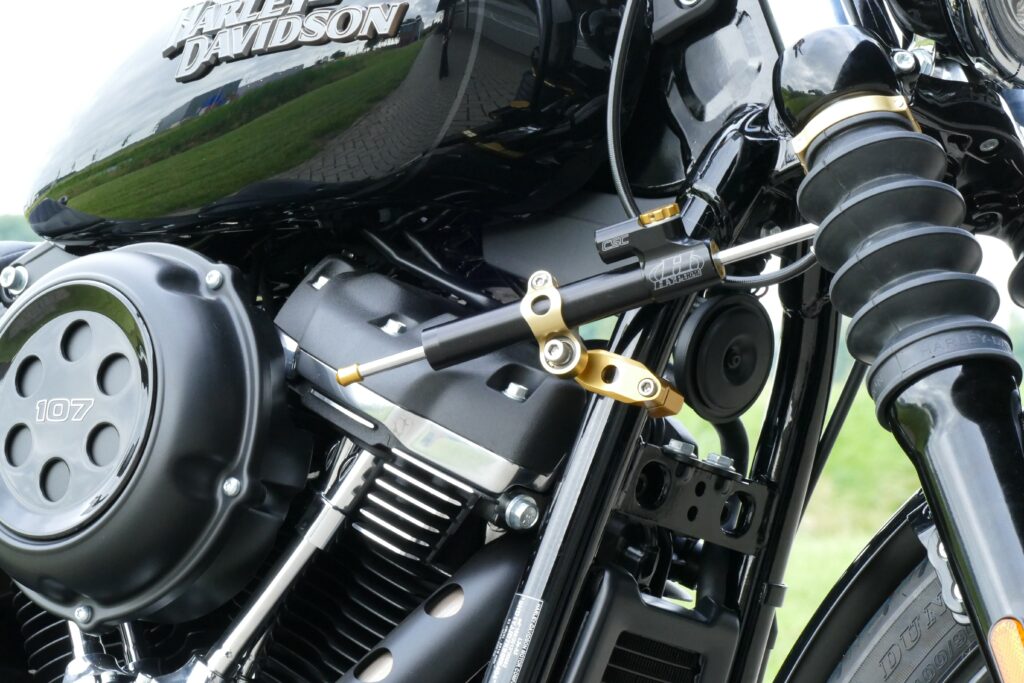
Yes, a steering damper can be rebuilt, but whether it is worth doing depends on the type of damper, the extent of wear, and your mechanical skill level. Most cartridge-style steering dampers can be disassembled, resealed, and refilled with fresh damping fluid. However, some modern units are sealed at the factory and are not designed for user servicing.
Understanding what causes a steering damper to degrade helps you decide whether a rebuild is realistic or whether replacement is the smarter move. The sections below walk through each key question riders typically face when their damper starts showing signs of wear.
What happens inside a steering damper when it wears out?
When a steering damper wears out, the internal seals degrade, the damping fluid breaks down or leaks, and the piston or valve mechanism loses its ability to generate consistent resistance. The result is a damper that either feels too loose, offers uneven resistance, or stops functioning altogether.
Inside a typical motorcycle steering damper, a piston moves through hydraulic fluid inside a sealed cylinder. The controlled resistance this creates is what smooths out wobbles, tank-slappers, and high-speed instability. Over time, several things degrade this system:
- Seal wear: The internal O-rings and lip seals harden or crack, allowing fluid to bypass the piston or leak externally.
- Fluid degradation: Hydraulic damping fluid absorbs moisture and loses its viscosity over time, reducing damping effectiveness.
- Piston and valve wear: The small check valves or shim stacks that control fluid flow can wear or become clogged, producing inconsistent damping behavior.
- Rod corrosion: The damper rod, if exposed to road grime and moisture, can develop surface pitting that accelerates seal wear.
Riders often notice the first signs of wear as a vague or wandering front end at highway speeds or a steering feel that has become noticeably lighter or less controlled than before. Visible oil weeping around the damper body is a clear indicator that the seals have started to fail.
Hyperpro
Ride with confidence
Find the nearest Hyperpro dealer and start your motorcycle upgrade.
Can a steering damper be rebuilt at home?
A steering damper can be rebuilt at home if it is a serviceable cartridge-style unit and you have basic mechanical skills, the correct tools, and access to the right replacement parts and fluid. Sealed or non-serviceable dampers cannot be rebuilt at home and require professional attention or full replacement.
For serviceable units, a home rebuild typically involves disassembling the damper body, removing the old seals, cleaning all internal components, replacing worn seals and O-rings, refilling with the correct viscosity damping fluid, and bleeding any trapped air before reassembly. The process is manageable for a rider comfortable with basic workshop tasks, but it does require precision.
A few important considerations before attempting a home rebuild:
- Confirm your damper model is listed as serviceable by the manufacturer before disassembling anything.
- Use only the fluid specification recommended for your unit. Using the wrong viscosity will change the damping characteristics.
- Cleanliness is important during reassembly. Even small particles introduced into the fluid can accelerate seal wear and valve wear.
- Bleeding the damper correctly after refilling is a step many home builders skip, which leads to inconsistent damping feel.
If you are unsure about the serviceability of your specific damper, contacting the manufacturer or a qualified suspension specialist before opening the unit is the right approach.
What parts are needed to rebuild a steering damper?
To rebuild a steering damper, you typically need a seal kit specific to your damper model, fresh hydraulic damping fluid of the correct viscosity, and any worn internal components such as O-rings, piston seals, or rod seals. In some cases, a worn damper rod or piston may also need replacing.
The exact parts list varies depending on the damper design, but a standard rebuild for a serviceable steering damper generally includes:
- Seal kit: Model-specific O-rings and lip seals that match the internal dimensions of your damper cylinder and rod.
- Damping fluid: Hydraulic fluid matched to the manufacturer’s viscosity specification. Using a generic fluid can alter damping behavior.
- Piston seal or wiper seal: These control how the piston moves through the fluid and are a common wear point.
- Damper rod: Only needed if the rod shows visible pitting or scoring that would damage new seals immediately after installation.
- Snap rings or circlips: Small retaining hardware that secures internal components. These are inexpensive and worth replacing during a rebuild.
Sourcing parts from the original manufacturer or a reputable suspension specialist ensures the components meet the correct tolerances. Using generic seal kits not matched to your damper’s dimensions is a common cause of failed rebuilds.
When is it better to replace than rebuild a steering damper?
Replacing a steering damper is the better choice when the damper is sealed and non-serviceable, when the damper body or rod is physically damaged, when rebuild parts are unavailable, or when the cost of parts and labor approaches the price of a new unit. Replacement also makes sense when the existing damper design no longer meets your riding needs.
There are several specific situations where rebuilding is not the practical option:
- Non-serviceable design: Some dampers are factory-sealed and cannot be disassembled without destroying the unit. Attempting a rebuild on these causes more damage.
- Structural damage: A bent damper rod, cracked body, or damaged mounting point cannot be corrected by resealing. These require full replacement.
- Unavailable parts: Older or discontinued damper models may have no seal kits or internal parts available, making a rebuild impossible regardless of skill level.
- Cost proximity: If a seal kit, fluid, and your time bring the total rebuild cost close to the price of a new damper, replacement gives you a fresh unit with a full service life.
- Upgrading performance: If your current damper is a basic linear-damping unit and you want progressive or adjustable damping behavior, replacement with a higher-specification model is the only path forward.
Replacement is not a failure. In many cases, it is the more cost-effective and technically sound decision, particularly when a better-performing damper is available for your specific motorcycle model.
How long does a steering damper last before it needs attention?
A steering damper typically lasts between 20,000 and 40,000 kilometers before it shows signs of wear, though this varies significantly depending on riding conditions, maintenance habits, and the quality of the unit. Dampers used on rough roads or in off-road conditions will wear faster than those used primarily on smooth tarmac.
Rather than relying solely on mileage, it is more useful to monitor performance indicators. A steering damper needs attention when you notice:
- Visible oil seepage or weeping around the damper body or rod
- A noticeably lighter or inconsistent steering feel compared to when the damper was new
- Increased sensitivity to high-speed instability, wobbles, or tank-slappers
- A grinding or notchy feeling when the handlebars are turned through the full range of motion
Periodic inspection is the most reliable maintenance strategy. Checking the damper for external fluid leaks and verifying that its adjustability still functions correctly takes only a few minutes and can catch problems early. Adjustable dampers should be cycled through their adjustment range occasionally to confirm all positions respond correctly.
Riding style also plays a role. Aggressive street riders and those who frequently use their motorcycle at high speeds put more demand on the damper than commuters and should inspect the unit more frequently as a result.
How Hyperpro helps with steering damper performance
If your steering damper has reached the end of its service life or you want to step up to a higher-performing unit, we offer two levels of steering damper technology designed for real-world riding conditions.
- CSC (Constant Safety Control): A linear damping model with 22 adjustable positions, designed to reduce wobbles, tank-slappers, and vibration across a wide range of riding situations.
- RSC (Reactive Safety Control): A progressive damping model with 22 adjustable positions that adapts its resistance to the speed and intensity of steering input, offering a more natural feel during normal riding while providing stronger damping when it matters most.
- Model-specific mounting kits: CNC-milled mounting kits in Hyperpro Gold or Black, designed as plug-and-play fitments that require no drilling or cutting in 98% of applications.
Both systems are developed to improve rider safety and steering control without compromising the natural feel of the motorcycle. You can browse our full range of suspension products to find the right fit for your bike. Purchases are available through our authorized distributor network. Contact us if you have questions about which damper suits your motorcycle.