


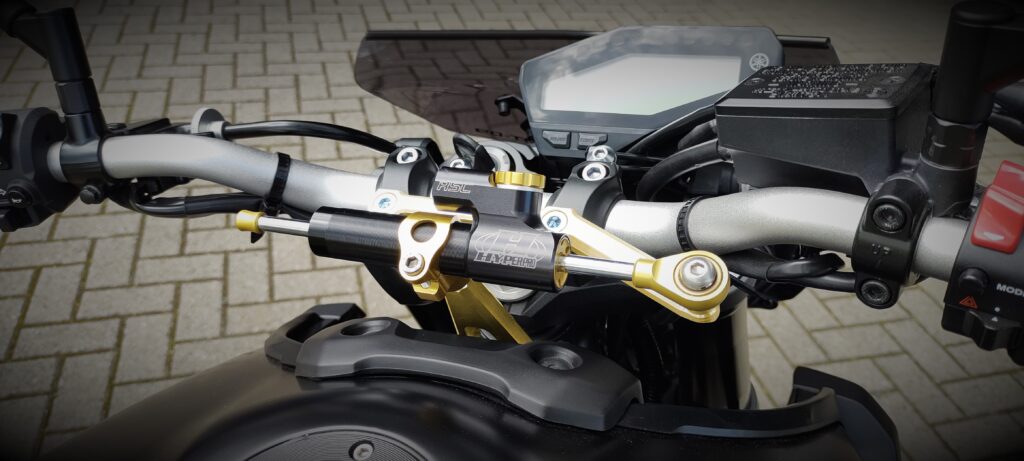
Yes, potholes can cause steering instability. When a wheel drops into a pothole and strikes the far edge, the impact sends a sharp, asymmetric force through the front end of the motorcycle. That force can disturb wheel alignment, damage suspension components, and create handling problems that range from a brief wobble to a persistent steering fault that worsens over time.
The severity depends on your speed at impact, the depth of the pothole, and the condition of your suspension before the hit. Riders with worn or factory-spec suspension are significantly more exposed than those running well-maintained or upgraded components. The sections below break down exactly what happens to your steering geometry, which parts take the most punishment, and what you can do about it.
How do potholes affect motorcycle steering geometry?
Potholes affect motorcycle steering geometry by delivering sudden, high-load impacts that the front suspension was not designed to absorb in isolation. When the front wheel strikes the trailing edge of a pothole, the fork legs compress unevenly, the wheel can deflect sideways, and the forces transmitted to the triple clamp and steering head can shift the effective rake and trail of the front end. Even a small change in these angles alters how the bike tracks and responds to steering input.
Rake and trail are the two geometry values that define steering feel. Rake is the angle of the fork relative to vertical, and trail is the horizontal distance between where the steering axis meets the ground and where the tire actually contacts the road. Both values are set precisely at the factory for a given riding style. A hard pothole impact can bend a fork tube, compress one leg more than the other, or loosen the steering head bearing preload, any of which shifts these values enough to make the bike feel nervous, slow to respond, or prone to wandering.
At higher speeds, even minor geometry disturbances become amplified. The bike’s self-correcting stability depends on consistent trail. Reduce that consistency and the front end loses its natural tendency to return to center, which is when riders start noticing the steering feels vague or requires constant correction.
What suspension components are most vulnerable to pothole damage?
The components most vulnerable to pothole damage are the fork tubes, fork springs, steering head bearings, and the front wheel itself. These parts sit directly in the impact path and absorb the initial shock before it can be distributed through the rest of the chassis. Each has a different failure mode, and damage to any one of them can produce steering instability.
- Fork tubes: A severe impact can bend or score a fork tube. Even a slight bend is enough to cause uneven damping between the two legs, which creates a pulling sensation under braking or cornering.
- Fork springs: Repeated pothole hits accelerate spring fatigue. A spring that has lost its rated rate allows the fork to bottom out more easily, reducing control at the moment you need it most.
- Steering head bearings: These bearings sit at the pivot point of the entire front end. Pothole impacts load them in ways normal riding does not. Over time, this causes pitting or loosening, which produces a notchy or sloppy feel when turning the bars.
- Front wheel and tire: A hard impact can crack a rim, cause a flat spot, or unseat a tire bead. Any of these creates an imbalance that transmits directly into the handlebars as vibration or wobble.
Hyperpro
Ride with confidence
Find the nearest Hyperpro dealer and start your motorcycle upgrade.
Why does steering feel loose or wobbly after hitting a pothole?
Steering feels loose or wobbly after hitting a pothole because the impact has disturbed one or more of the systems that keep the front end stable and centered. The most common causes are a loosened steering head bearing, a bent fork tube, or wheel imbalance from a damaged rim or tire. Each of these disrupts the precise mechanical relationship between the handlebars and the contact patch.
A loosened steering head bearing is particularly common after a sharp pothole hit. When the bearing loses its preload, the steering no longer has a firm pivot point. This creates a small but noticeable amount of play in the bars, which riders often describe as a floating or disconnected feeling. Under acceleration or at higher speeds, this play can trigger a tank-slapper, where the bars oscillate rapidly from side to side.
Wheel imbalance from a bent rim produces a different symptom. Instead of a loose feeling, you get a rhythmic vibration through the bars that increases with speed. If the tire was also affected, the vibration may be accompanied by a pulling sensation as the flat spot on the tire contacts the road once per revolution.
A steering damper can help suppress the oscillations that result from these disturbances, but it does not fix the underlying mechanical fault. Always inspect the components first before relying on damping to mask a problem.
Can worn suspension make pothole damage worse?
Yes, worn suspension makes pothole damage significantly worse. When fork springs have lost their rated stiffness and damping fluid has degraded, the fork cannot control the speed of compression and rebound during an impact. Instead of absorbing the pothole’s energy progressively, the fork bottoms out or rebounds violently, multiplying the force transferred to the steering head, bearings, and frame.
Factory suspension is calibrated for a specific load and riding style, and it degrades with use. Springs sag over time, losing the preload that keeps the fork in its optimal working range. Damping oil becomes contaminated and thins out, reducing the fork’s ability to control movement. A fork in this condition hitting a pothole at speed behaves more like a rigid connection than a suspension system, transmitting the full shock load into the chassis.
Rear suspension wear compounds the problem. A worn rear shock allows the back of the bike to squat and pitch unpredictably after a pothole hit, shifting weight distribution forward onto an already stressed front end. The combined effect is a bike that feels unstable and difficult to settle after any significant road irregularity. Maintaining your suspension components in good condition is one of the most direct ways to protect your steering geometry from pothole-related damage.
What’s the difference between a one-time steering wobble and a persistent handling problem?
A one-time steering wobble is a brief, self-correcting oscillation that resolves within one or two seconds without rider input. A persistent handling problem is a recurring or constant fault that requires active correction, worsens under acceleration or braking, or changes the bike’s baseline behavior. The distinction matters because a one-time wobble may simply reflect a sharp surface disturbance, while a persistent fault signals mechanical damage that needs attention.
Signs of a one-time wobble
A single wobble after a pothole hit is often caused by the front wheel briefly losing traction or the suspension rebounding faster than the tire can re-establish its contact patch. The bars shake once or twice and then settle. The bike returns to its normal straight-line tracking without any further symptoms. This type of event is worth noting but does not necessarily indicate damage.
Signs of a persistent handling problem
If the wobble returns every time you accelerate past a certain speed, if the bars feel permanently looser than before the impact, or if the bike now pulls to one side under braking, these are signs of a mechanical fault. Persistent symptoms to watch for include:
- A rhythmic vibration through the handlebars that increases with speed
- A notchy or stiff feeling when turning the bars from lock to lock
- The bike drifting to one side on a straight, flat road without wind
- A wobble that appears consistently above a specific speed threshold
Any of these symptoms after a pothole impact warrants a proper inspection of the steering head bearings, fork tubes, and wheel. Do not ride at speed on a bike showing these signs.
How can upgraded suspension reduce pothole-related steering instability?
Upgraded suspension reduces pothole-related steering instability by managing impact energy more effectively than worn or factory-spec components. Progressive-rate springs, higher-quality damping, and a dedicated steering damper each address a different part of the problem. Together, they give the front end the tools to absorb sharp impacts without transmitting them into the steering geometry as destabilizing forces.
Progressive-rate fork springs are stiffer as compression increases, which means they resist bottoming out during a hard pothole hit while remaining compliant over smaller irregularities. This keeps the fork in its working range rather than slamming through its travel and loading the steering head with the full impact force.
A steering damper addresses the oscillation side of the problem. When a pothole disturbs the front wheel’s tracking, the damper resists the rapid bar movement that leads to a tank-slapper or wobble. We design our steering dampers in two configurations: the CSC model for linear damping and the RSC model for progressive damping that responds proportionally to the speed of the steering movement. Both are adjustable across 22 positions, so you can tune the resistance to match your riding style and road conditions. Our model-specific mounting kits are CNC-milled for a plug-and-play fit on most bikes, requiring no drilling or cutting in 98% of applications.
The result is a front end that stays composed after a pothole hit rather than transmitting the disturbance into a wobble or a handling fault. Upgraded suspension does not make potholes disappear, but it gives your bike the mechanical resilience to handle them without compromising your steering control.
How Hyperpro helps with pothole-related steering instability
We develop suspension products specifically designed to keep your front end stable when the road surface works against you. If pothole impacts are affecting your steering confidence, here is what we offer:
- CSC and RSC steering dampers: Both models are adjustable in 22 positions and suppress tank-slappers, wobbles, and vibrations caused by road surface disturbances.
- Model-specific mounting kits: CNC-milled in Hyperpro Gold or Black, these kits fit your bike without drilling or cutting in 98% of applications.
- Progressive-rate fork springs: Bike-specific fitment options that keep your fork in its working range during hard impacts, reducing the load transferred to the steering head.
- Shock absorbers: Rear suspension upgrades that stabilize weight distribution after a pothole hit, reducing the knock-on effect on the front end.
Purchases are always made through our authorized distributor network. Contact us if you need guidance on which products suit your bike and riding conditions, or find your nearest stockist to get started.