


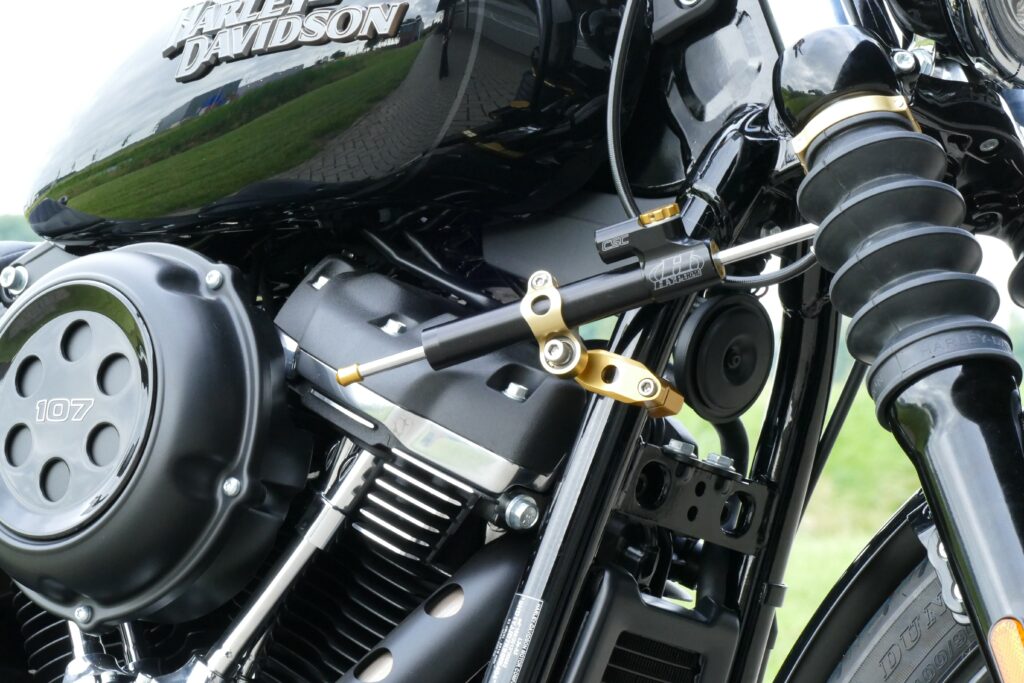
You can tell your steering damper is worn out when your bike develops a wobble or tank-slapper at speed, the handlebar feels unusually light or twitchy, or the damper body shows visible oil leakage. A worn steering damper no longer provides consistent resistance to unwanted handlebar movement, which directly affects your safety and control on the road. The sections below walk through every key question riders have about diagnosing, testing, and replacing a failing unit.
What symptoms does a failing steering damper cause?
A failing steering damper causes handlebar wobble at speed, increased sensitivity to road imperfections, and a general feeling of instability in the front end. In more severe cases, it can allow a full tank-slapper, where the handlebars oscillate rapidly and uncontrollably, which is one of the most dangerous situations a rider can face. These symptoms typically worsen as speed increases.
Here is what to watch for when your steering damper starts to fail:
- Wobble or weave at highway speeds that was not present before
- Handlebar twitchiness when hitting bumps, road seams, or surface changes
- Reduced confidence during cornering, especially when leaning into fast bends
- Visible oil residue on the damper body or mounting hardware, indicating a seal failure
- Uneven or notchy resistance when you manually move the handlebar through its range of motion
- Front-end instability during braking, particularly under hard or emergency stops
It is worth noting that some of these symptoms overlap with other front-end issues such as worn fork seals, loose steering head bearings, or incorrect tyre pressure. Before assuming the damper is the problem, rule out those other causes first. That said, if the damper itself shows oil leakage, the diagnosis is straightforward.
How do you test a steering damper at home?
You can test a steering damper at home by removing it from the bike and manually compressing and extending it through its full stroke while feeling for consistent resistance. A functioning damper should move smoothly with steady, even resistance in both directions. If you feel dead spots, sudden drops in resistance, or the unit moves freely without any noticeable damping force, it has failed.
Follow these steps for a basic home inspection:
- Visual check first: Look for oil staining, cracked seals, or corrosion on the body and rod. Any oil film on the shaft is a sign the internal seals have given way.
- Manual stroke test: With the damper removed, grip both ends and push them together slowly, then pull them apart. The resistance should feel consistent and progressive throughout the stroke, not loose at one end and tight at the other.
- Adjuster function check (if adjustable): If your damper has a dial or adjuster, turn it through its range and repeat the stroke test. You should feel a clear difference in resistance between the softest and firmest settings. If all settings feel the same, the adjuster mechanism has worn out.
- On-bike check: With the damper reinstalled and the bike on a paddock stand, slowly turn the handlebar from lock to lock. The movement should feel controlled and deliberate, not sloppy or free-spinning.
If any of these tests reveal inconsistent resistance, free play, or leakage, the unit needs replacing. A home test cannot measure exact damping force values, but it is reliable enough to identify a clearly failed component.
Hyperpro
Ride with confidence
Find the nearest Hyperpro dealer and start your motorcycle upgrade.
What causes a steering damper to wear out faster?
A steering damper wears out faster when it is exposed to heavy vibration, extreme temperatures, aggressive riding styles, or poor maintenance. Bikes used on rough roads, track days, or in off-road conditions put significantly more stress on the damper than those ridden primarily on smooth tarmac. Incorrect adjustment, such as running the damper too stiff for normal street riding, also accelerates internal wear.
The main factors that shorten a steering damper’s service life include:
- Rough road surfaces: Constant input from potholes, gravel, and uneven tarmac forces the damper to work harder and more frequently
- Track use: High-speed cornering and braking generate intense forces through the front end that stress the damper repeatedly
- Incorrect fitment: A damper that is not properly aligned with the steering axis creates side loading on the rod and seals, causing premature wear
- Neglected maintenance: Leaving a damper unchecked for years allows small seal degradation to become a full leak without early intervention
- Extreme heat: Engine heat and high ambient temperatures degrade the internal seals and the hydraulic fluid over time
- Contamination: Dirt or water entering around the rod seal breaks down the internal fluid and scores the bore
How long does a motorcycle steering damper last?
A motorcycle steering damper typically lasts between 30,000 and 60,000 kilometres under normal street riding conditions, though this varies widely depending on riding style, road quality, and how well the unit is maintained. High-quality dampers with proper fitment and regular inspection can last the lifetime of the motorcycle. Budget units or those subjected to hard use often need replacement much sooner.
There is no universal service interval because dampers do not wear on a fixed schedule the way consumables like brake pads or tyres do. Instead, inspect your damper at least once a year or after any significant crash or impact. Look for oil weeping, changes in damping feel, and any physical damage to the body or mounting points. Catching a failing seal early can sometimes extend the unit’s usable life if the damper is serviceable.
If you bought your bike second-hand and have no service history for the damper, it is worth doing a manual stroke test as described above to establish a baseline. Riders who cover high annual mileage, particularly on varied road surfaces, should inspect more frequently.
Should you repair or replace a worn steering damper?
In most cases, you should replace a worn steering damper rather than repair it. While some high-end dampers are serviceable and can have their seals and fluid replaced by a specialist, the labour cost often approaches or exceeds the cost of a new unit. For the majority of riders, replacing the damper is the more practical and reliable choice.
Consider repair only when:
- The damper body and rod are in good physical condition with no scoring or bending
- The failure is limited to a seal leak and the internal components are otherwise intact
- The unit is a premium model where the rebuild cost is clearly lower than replacement
In all other situations, replacement gives you a known-good starting point with full damping performance restored. When choosing a replacement, look for a model that matches your bike’s geometry and riding needs. Adjustable dampers offer a meaningful advantage here because you can tune the resistance to suit different conditions rather than being locked into a single fixed setting.
How Hyperpro helps with steering damper wear
When it is time to replace a worn unit, we offer two purpose-built steering damper systems designed to give you immediate, measurable improvement in front-end stability and control:
- CSC (Constant Safety Control): A linear damping model with 22 adjustable positions, suited to riders who want consistent, predictable resistance across all riding conditions
- RSC (Reactive Safety Control): A progressive damping model with 22 adjustable positions that increases resistance proportionally as handlebar movement intensifies, making it particularly effective against tank-slappers and high-speed wobbles
- Model-specific mounting kits: CNC-milled brackets available in Hyperpro Gold or Black, designed as plug-and-play fitments that require no drilling or cutting in 98% of applications
- Direct replacement logic: Every kit is developed for a specific motorcycle model, so fitment is accurate and installation is straightforward
You can browse our full suspension product range to find the right damper for your bike. Purchases are always made through our authorised distributor network. Contact us if you have questions about which system suits your riding style or need help identifying the correct mounting kit for your model.