


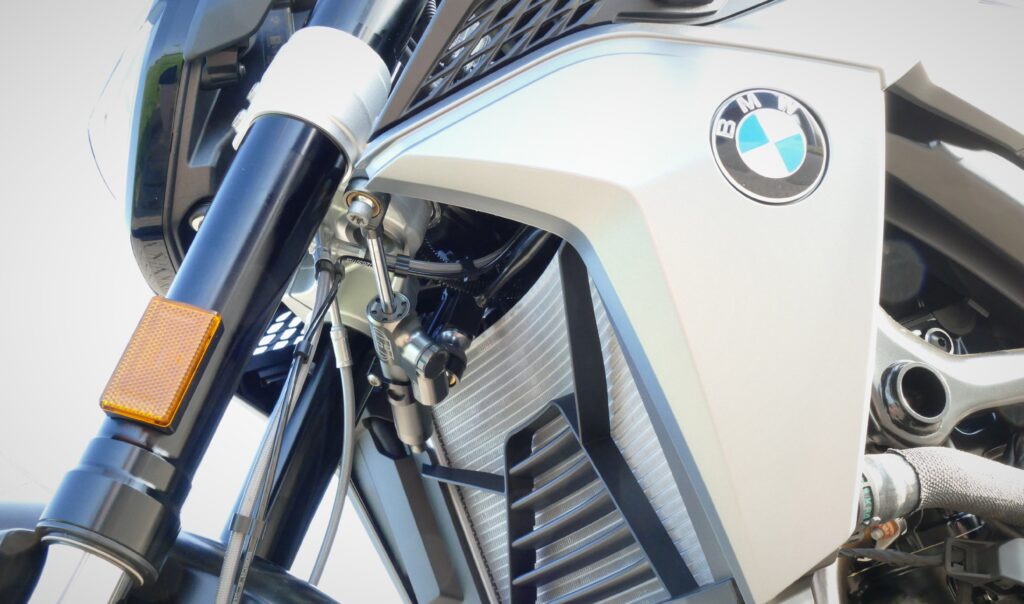
To adjust a steering damper, turn the adjustment knob or dial to increase or decrease resistance. Most motorcycle steering dampers use a numbered dial with clearly marked positions. Start from the minimum setting, ride briefly, and add resistance in small increments until the steering feels stable without becoming heavy or unresponsive.
The right setting depends on your riding style, speed, and road conditions. A well-adjusted steering damper reduces wobble and tank-slappers while keeping the steering natural and precise. The sections below cover each aspect of adjustment in detail, from understanding what the damper controls to choosing the right setting for road or track use.
What does a steering damper actually control?
A steering damper controls the rate at which your handlebars can rotate from side to side. It resists sudden, uncontrolled steering inputs caused by road imperfections, speed wobbles, or front-wheel instability. The damper does not steer the bike for you. It absorbs unwanted oscillations while allowing deliberate steering movements to pass through normally.
At higher speeds, the front wheel becomes more susceptible to wobble. A bump, a change in road surface, or a moment of instability can trigger a rapid side-to-side oscillation of the handlebars. Without damping, this can escalate into a tank-slapper. The steering damper absorbs that energy before it builds into something unmanageable.
It is worth noting that a steering damper works alongside your fork springs and shock absorber, not instead of them. If your suspension is poorly set up, a damper will mask symptoms without solving the underlying problem. Good suspension components and a properly adjusted damper together produce a stable, confidence-inspiring ride.
Hyperpro
Ride with confidence
Find the nearest Hyperpro dealer and start your motorcycle upgrade.
What are the main adjustment settings on a steering damper?
Most adjustable steering dampers use a single rotary knob that controls the level of damping resistance. Turning it clockwise increases resistance, turning it counterclockwise reduces it. The adjustment range is typically divided into numbered positions, allowing you to make repeatable, incremental changes rather than guessing at the setting.
Some dampers, including the models we produce at Hyperpro, offer 22 adjustment positions. This level of precision means you can fine-tune the feel in small steps, which is particularly useful when dialling in a setting for a specific track or road condition.
There are two main damping approaches to be aware of:
- Linear damping: Applies the same level of resistance throughout the full range of steering movement. This provides consistent feel and is well suited to road riding where predictability matters.
- Progressive damping: Increases resistance as steering movement becomes more extreme. This allows light, natural steering at normal angles while providing stronger resistance when the handlebars snap suddenly, such as during a tank-slapper.
Progressive damping, like the RSC system in our steering damper range, is particularly effective for riders who want responsive everyday steering without sacrificing protection at the limit.
How do you adjust a steering damper step by step?
Adjust a steering damper by starting at the minimum setting, riding to assess the feel, and increasing resistance in small steps until the steering is stable without feeling heavy. Always test at low speed first before moving to higher speeds or more demanding conditions.
Follow these steps for a methodical adjustment:
- Set the damper to minimum. Turn the adjustment knob fully counterclockwise to start from the lowest resistance position. This gives you a clear baseline.
- Ride at low speed. Take the bike out on a familiar, low-traffic road. Assess how the steering feels. At minimum damping, the handlebars should move freely with no resistance.
- Increase in small increments. Add two to three positions of resistance at a time. Ride again after each adjustment. You are looking for a setting where the steering feels controlled without requiring extra effort to turn.
- Test at higher speeds. Once the low-speed feel is right, test on faster roads or a motorway. At speed, the damper should prevent any hint of wobble without making the steering feel sluggish.
- Note your final setting. Write down the position number so you can return to it easily, or adjust from a known reference point in the future.
What setting should a steering damper be on for road riding vs. track riding?
For road riding, use a lower to mid-range damping setting. For track riding, especially at higher speeds or on bikes with aggressive geometry, a higher setting is generally more appropriate. The key difference is that road riding demands light, responsive steering, while track riding at speed benefits from more resistance to prevent instability.
On the road, you encounter slow-speed manoeuvres, U-turns, and varied surfaces. Too much damping makes these feel heavy and tiring. A setting in the lower third of the adjustment range typically provides enough protection against wobble while keeping the steering natural.
On track, speeds are higher and the consequences of a tank-slapper are more severe. Riders often increase damping by several positions compared to their road setting. However, going too high on track will slow your steering response, which can affect lap times and confidence in fast direction changes. The right track setting is a balance between protection and agility, and it may vary depending on the circuit and your riding style.
Why does my steering feel heavy after adjusting the damper?
Heavy steering after a damper adjustment means the resistance setting is too high. The damper is applying more force than necessary, making normal steering inputs feel stiff and unnatural. Reduce the adjustment by two to three positions and test again until the steering returns to a responsive, natural feel.
Heavy steering can also result from a mechanical issue rather than an adjustment problem. Check the following if reducing the setting does not resolve it:
- The damper mounting bolts may be too tight, creating friction at the pivot points.
- The damper rod or body may be binding against the frame or bracket during steering movement.
- The damper may have been installed incorrectly, with the body or rod at an angle that creates resistance beyond the intended range.
If the damper was recently installed, verify that the mounting kit is correctly fitted and that the damper moves freely through the full steering lock in both directions before riding.
Should I adjust my steering damper before or after other suspension work?
Adjust your steering damper after completing other suspension work. Fork spring preload, sag settings, and shock absorber adjustments all affect how the front end behaves, which in turn affects how much damping you need from the steering damper. Setting the damper first and then changing the suspension will likely mean readjusting it anyway.
The correct order for a full suspension setup is:
- Set rider sag on both the front forks and the rear shock.
- Adjust rebound and compression damping on the forks and shock if available.
- Ride to assess the overall balance and stability of the chassis.
- Then adjust the steering damper to suit the now stable suspension baseline.
This sequence matters because a poorly set-up suspension can create instability that no steering damper setting will fully correct. If your front end dives excessively under braking or your rear is too soft, the steering will feel unpredictable regardless of damper adjustment. Sorting the suspension first gives the steering damper the right conditions to do its job effectively.
How Hyperpro helps you get your steering damper right
We design our steering dampers specifically to give you clear, precise control over your bike’s stability. Whether you ride on the road or push the limits on track, our damper range gives you the tools to dial in exactly the right feel.
Here is what makes our approach different:
- 22 adjustment positions on both the CSC (linear damping) and RSC (progressive damping) models, so you can fine-tune in small, repeatable steps.
- Model-specific mounting kits, CNC-milled for your exact bike, that fit as plug-and-play in 98% of applications with no drilling or cutting required.
- Two damping technologies to match your riding style: linear for consistent, predictable feel on the road, and progressive for reactive protection that increases only when you need it most.
- Available in Hyperpro Gold or Black to suit your bike’s aesthetic without compromising on engineering quality.
If you have questions about which steering damper fits your bike or need guidance on setup, get in touch with us. To purchase, visit one of our authorised distributors who can advise you on the right product for your model and riding needs.