


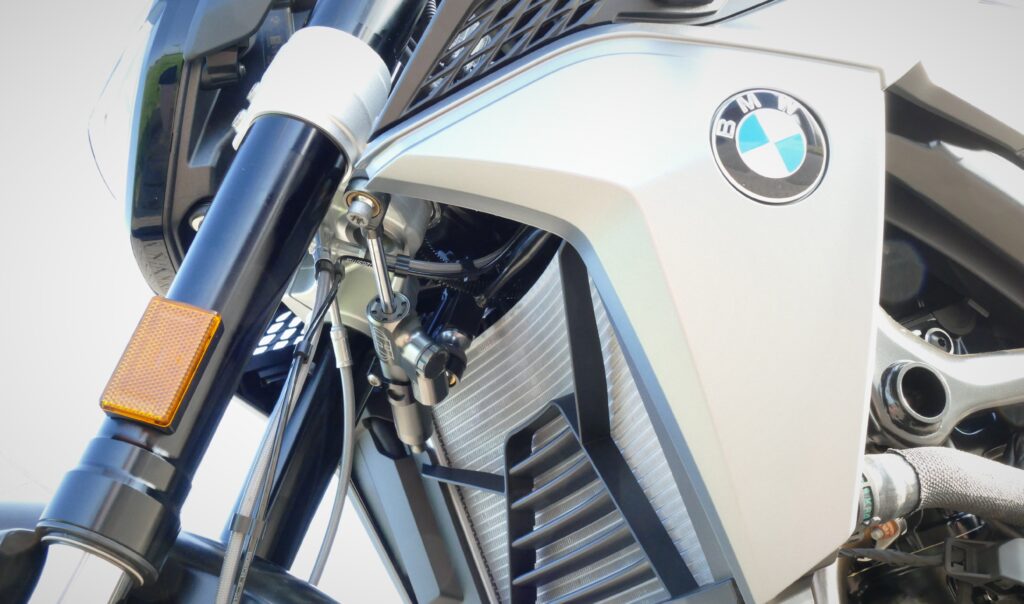
A steering damper is a device that resists sudden, unwanted handlebar movements on a motorcycle, preventing dangerous oscillations like tank-slappers and high-speed wobbles. It works by adding controlled hydraulic resistance to the steering axis, allowing smooth, intentional steering inputs while absorbing the rapid, erratic forces that can cause a rider to lose control. The sections below answer the most important questions about how steering dampers work, when you need one, and how to pick the right model for your bike.
How does a steering damper actually work?
A steering damper works by using hydraulic fluid inside a cylinder or rotary housing to resist rapid steering movement. When the handlebars move slowly and deliberately, the damper offers minimal resistance. When they snap violently from side to side, the fluid creates drag that slows and absorbs that movement before it escalates into a full wobble.
Inside the damper, a piston or rotary vane moves through hydraulic oil. The speed of that movement determines how much resistance is generated. Slow inputs, like turning into a corner, pass through with almost no interference. Fast, uncontrolled inputs, like the handlebars snapping back after hitting a bump at speed, meet significant resistance and are absorbed before they can amplify.
Most modern steering dampers are adjustable, letting riders dial in the level of damping to suit their riding style, bike type, and typical road conditions. Too little damping and the device does nothing useful. Too much and it can make the bike feel heavy to steer, especially at low speeds.
Hyperpro
Ride with confidence
Find the nearest Hyperpro dealer and start your motorcycle upgrade.
What problems does a steering damper solve?
A steering damper primarily solves tank-slappers, speed wobbles, and handlebar vibration. These are situations where the front wheel loses traction or gets airborne, then reconnects with the road at an angle, sending the handlebars into a rapid back-and-forth oscillation. Without damping, that oscillation can escalate fast enough to throw the rider off the bike.
Beyond the most dramatic scenarios, steering dampers also address more subtle issues that affect everyday riding:
- High-speed instability: At motorway speeds, even small aerodynamic forces or road imperfections can introduce a gentle weave. A damper keeps this from developing into something more serious.
- Rough road surfaces: Cobblestones, gravel patches, and expansion joints can all introduce sudden steering deflections. Damping absorbs these before the rider has to react.
- Wheelie landings: When the front wheel returns to the ground after a wheelie, the steering can snap unpredictably. A damper controls that snap.
- Handlebar vibration: Persistent vibration through the bars at certain engine speeds or road conditions is reduced, lowering rider fatigue on longer trips.
In short, a steering damper acts as a safety buffer between the unpredictable forces acting on your front wheel and the handlebars you are holding.
When is a steering damper necessary on a motorcycle?
A steering damper becomes especially necessary when a motorcycle is ridden at high speeds, fitted with performance modifications, or used on surfaces where traction is inconsistent. Factory suspension is designed around average conditions and average riders. Push beyond those parameters and the risk of steering instability rises significantly.
You should seriously consider fitting a steering damper if any of the following apply to your riding situation:
- You regularly ride at sustained high speeds, including track days or fast motorway touring.
- Your bike has been modified with a different front tyre profile, lowered suspension, or a more aggressive riding position.
- You ride an adventure or dual-sport motorcycle on unpaved surfaces where front wheel deflection is common.
- Your bike is known to have a tendency toward front-end instability, particularly at speed.
- You have experienced a wobble or tank-slapper before, even a minor one.
For riders who stay within relaxed urban or suburban riding, a steering damper is less pressing, though it still adds a useful layer of control. For anyone pushing pace or riding in varied conditions, it is a worthwhile safety upgrade rather than an optional extra.
What’s the difference between a rotary and a linear steering damper?
The main difference between a rotary and a linear steering damper is the direction of movement. A linear damper uses a piston that slides back and forth in a straight line, mounted between the frame and the steering head. A rotary damper uses a vane that rotates inside a housing, mounted directly on top of the steering stem. Both achieve the same goal through different mechanical approaches.
Linear steering dampers
Linear dampers are the traditional design. They are typically mounted along the top of the triple clamp and connect to the frame via a bracket. They are visible, relatively straightforward to service, and offer a wide range of adjustability. The linear motion of the piston translates directly into damping force as the bars move left or right. This design works well on bikes with space for the mounting arrangement and suits riders who want a clear, mechanical feel to the damping action.
Rotary steering dampers
Rotary dampers sit compactly on top of the steering stem, making them a popular choice for modern sport bikes and adventure motorcycles where space is limited. Because the vane rotates with the steering movement, the packaging is neater and the damping action can be tuned to respond progressively, increasing resistance as steering deflection increases. This progressive characteristic means light inputs feel natural while the damper becomes more active exactly when instability is most likely.
Hyperpro offers both a linear CSC (Constant Safety Control) model and a progressive RSC (Reactive Safety Control) model, each adjustable across 22 positions, giving riders a precise level of control suited to their bike and riding style.
Does a steering damper affect normal handling?
A correctly adjusted steering damper does not noticeably affect normal handling. At the damping levels suited to everyday riding, the resistance it adds is imperceptible during intentional steering inputs like cornering, lane changes, or low-speed manoeuvring. You steer the bike exactly as you normally would.
The key word is correctly adjusted. A damper set too stiff will make the bars feel heavy and slow to respond, which can actually reduce confidence and make riding more tiring. This is why adjustability matters. Most quality dampers let you tune the resistance so it activates meaningfully during fast, uncontrolled movement while staying transparent during deliberate, measured inputs.
Some riders worry that a steering damper will mask feedback from the front tyre. In practice, a well-set damper does not eliminate tyre feel. It filters out the violent, uncontrolled movements while leaving the subtle communication between tyre and handlebar intact. The result for most riders is a bike that feels more planted and predictable, not less communicative.
How do you choose the right steering damper for your motorcycle?
Choosing the right steering damper comes down to three factors: damper type, adjustability, and fitment. You need a damper that suits your riding style, offers enough adjustment range to dial in the correct resistance, and physically fits your specific motorcycle without requiring complex fabrication work.
Start by considering how you ride. Riders who prioritise safety and everyday control benefit from a linear damper with consistent damping across the steering range. Riders who push harder or who want the damper to stay more passive during normal cornering and only activate during instability will find a progressive rotary damper a better match.
Fitment is where many riders run into problems. A damper that requires drilling frames or fabricating custom brackets introduces risk and complexity. Look for model-specific mounting kits designed as plug-and-play solutions for your exact bike. This removes guesswork, ensures the damper geometry is correct, and means installation is straightforward.
You can browse the full range of suspension products to find options matched to your motorcycle model. When you are ready to purchase, our dampers are available through authorised distributors worldwide. If you have questions about which model suits your bike, you can reach us through the contact page and we will point you in the right direction.
How Hyperpro helps with steering control and stability
We design our steering dampers specifically to address the instability problems described throughout this article. Here is what makes our approach practical for riders looking for a real upgrade:
- Two damper models: The CSC delivers consistent linear damping for reliable, predictable control. The RSC uses progressive damping that increases resistance as instability grows, staying transparent during normal riding and intervening decisively when it matters.
- 22-position adjustment: Both models offer fine-grained tuning so you can match the damping level to your riding style, bike geometry, and typical conditions.
- Model-specific mounting kits: Our CNC-milled brackets are designed for your exact motorcycle, available in Hyperpro Gold or Black. In 98% of applications, installation requires no drilling or cutting.
- Safety-focused engineering: Every damper is built to reduce tank-slappers, wobbles, and vibration, giving you more confidence in the situations where control matters most.
Purchases are made through our network of authorised distributors. Find a dealer near you to get started, or contact us directly if you need guidance on the right damper for your bike.