


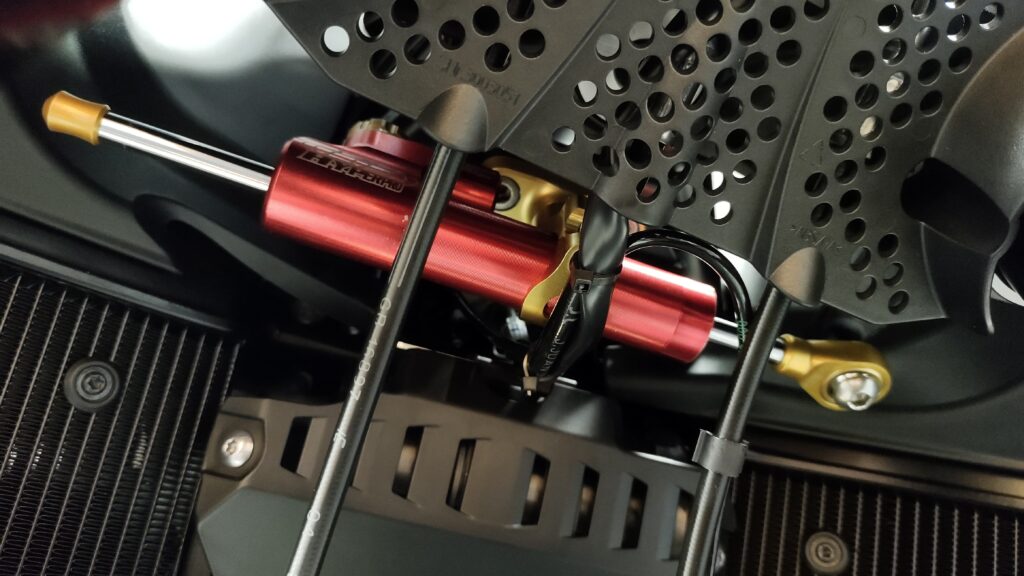
Yes, a steering damper can mask an underlying suspension problem. A damper reduces the symptoms of instability, such as wobbles and tank-slappers, but it does not fix the mechanical root cause. If worn springs, incorrect preload, or damaged bearings are generating the instability in the first place, adding a damper may make the bike feel more manageable while the real fault goes unaddressed.
This distinction matters because riding on degraded suspension while relying on a damper for stability is a safety risk, not a solution. The sections below break down exactly which problems a damper solves, which ones it can hide, and how to tell the difference before you make any changes to your setup.
What problems does a steering damper actually fix?
A steering damper fixes instability that originates in the steering axis itself, not in the suspension. It resists rapid, unwanted steering inputs, which reduces tank-slappers, high-speed wobbles caused by road surface irregularities, and the oscillation that can occur when accelerating hard out of a corner. These are genuine steering control problems that a damper is designed to address.
The key distinction is that these issues involve the handlebar moving erratically in response to external forces, not the suspension failing to absorb those forces. A rough road surface, a wheelie landing, or a sudden change in grip can all trigger a steering oscillation even on a mechanically sound bike. In those situations, a steering damper adds a layer of control that the factory setup does not provide.
Dampers are also effective at reducing vibration transmitted through the bars on long rides, which improves comfort and reduces rider fatigue. Again, this is a steering-axis issue, not a suspension fault.
Hyperpro
Ride with confidence
Find the nearest Hyperpro dealer and start your motorcycle upgrade.
What suspension issues can a steering damper hide?
A steering damper can hide several suspension faults by suppressing the wobble or instability they produce, without correcting the underlying mechanical condition. The most common issues that get masked include worn or incorrectly rated fork springs, insufficient or excessive damping in the forks or rear shock, loose or worn steering head bearings, and incorrect tyre pressure or tyre wear.
Each of these faults causes the front end to behave unpredictably under load or during direction changes. A damper reduces the visible symptom, which is the handlebar oscillation, but the suspension itself is still not performing correctly. The bike may feel stable at moderate speeds while the fault continues to worsen. At higher speeds or in demanding situations, the damper may no longer be able to compensate, and the instability returns, often more severely.
Worn steering head bearings are a particularly important fault to check. They allow play in the steering that a damper partially masks by adding resistance to movement. If the bearings are not replaced, the play increases over time and the damper has to work harder to compensate, which shortens its service life and reduces its effectiveness.
How do you tell if wobble is a damper issue or a suspension fault?
You can tell the difference by isolating when and how the wobble occurs. A wobble that appears at a specific speed range and disappears above or below it is more likely related to suspension geometry or tyre balance. A wobble triggered by external inputs, such as road surface changes or acceleration, points more toward a steering control issue that a damper addresses.
Run through this diagnostic process before drawing conclusions:
- Check tyre pressure and tyre condition first. An underinflated or unevenly worn tyre causes speed-sensitive wobble that no damper will reliably fix.
- Inspect the steering head bearings for play by lifting the front wheel and moving the bars side to side. Any notchiness or looseness indicates a bearing issue.
- Assess the fork springs. If the front end dives heavily under braking or wallows through corners, the springs are likely worn or incorrectly rated for your weight and riding style.
- Check rear suspension sag and preload. An imbalanced chassis, where the rear sits too high or too low relative to the front, creates instability that mimics a steering problem.
If all of these checks come back clean and the wobble still occurs under specific steering inputs, a damper is likely the right tool for the job. If any of these checks reveal a fault, address that first.
Should you install a steering damper before or after sorting suspension?
You should sort the suspension first, then install a steering damper. Fitting a damper to a bike with unresolved suspension faults means you are adjusting a control system on top of a mechanical problem. The damper may reduce the symptoms temporarily, but it cannot compensate for incorrect spring rates, worn components, or misaligned geometry over the long term.
The correct sequence is straightforward:
- Inspect and service the steering head bearings.
- Check tyre condition and pressure.
- Set correct suspension sag front and rear for your weight.
- Upgrade fork springs or the rear shock if the factory setup is not suited to your riding style or load.
- Install a steering damper once the suspension is functioning correctly.
When the suspension is properly set up, a steering damper adds genuine value by handling the residual instability that even a well-tuned chassis can produce under demanding conditions. At that point, it is doing its actual job rather than covering for a fault elsewhere. You can browse the full range of suspension and damper products to find the right combination for your bike.
What are the signs your steering damper is set incorrectly?
The signs of an incorrectly set steering damper fall into two categories: too much damping and too little. If the damper is set too stiff, the steering feels heavy and unresponsive, the bike resists direction changes, and you may feel a delay between your input and the bike’s reaction. If it is set too soft, wobbles and oscillations still occur, and the damper provides little noticeable benefit.
A correctly adjusted damper should be almost invisible in normal riding. You should not feel it fighting your inputs through corners or at low-speed manoeuvring. Its effect becomes apparent only when an external force, such as a bump or a sudden change in grip, tries to deflect the steering. At that point, it should resist the unwanted movement without interfering with your intentional steering.
Most quality adjustable dampers offer a range of positions to fine-tune this balance for different riding conditions. Heavier, faster riding typically calls for firmer settings. Street riding at mixed speeds generally works best with a lighter setting that keeps steering natural and responsive.
How Hyperpro helps with steering stability
We design our steering dampers specifically to add genuine control without masking problems that need fixing. Before fitting any damper, we recommend working through a proper suspension check so the damper can do its actual job. Once your setup is sorted, here is what our steering damper range offers:
- CSC (Constant Safety Control): A linear damping model with 22 adjustable positions, suited to riders who want consistent, predictable resistance across all steering inputs.
- RSC (Reactive Safety Control): A progressive damping model with 22 adjustable positions that responds proportionally to the speed and force of the steering movement, providing more resistance when it is needed most and less during normal riding.
- Model-specific mounting kits: CNC-milled brackets designed for your exact bike, available in Hyperpro Gold or Black. In 98% of applications, fitting requires no drilling or cutting.
If you are unsure which model suits your bike or riding style, contact us and we will point you in the right direction. Purchases are handled through our authorised distributor network, so you get the right product with proper local support.