


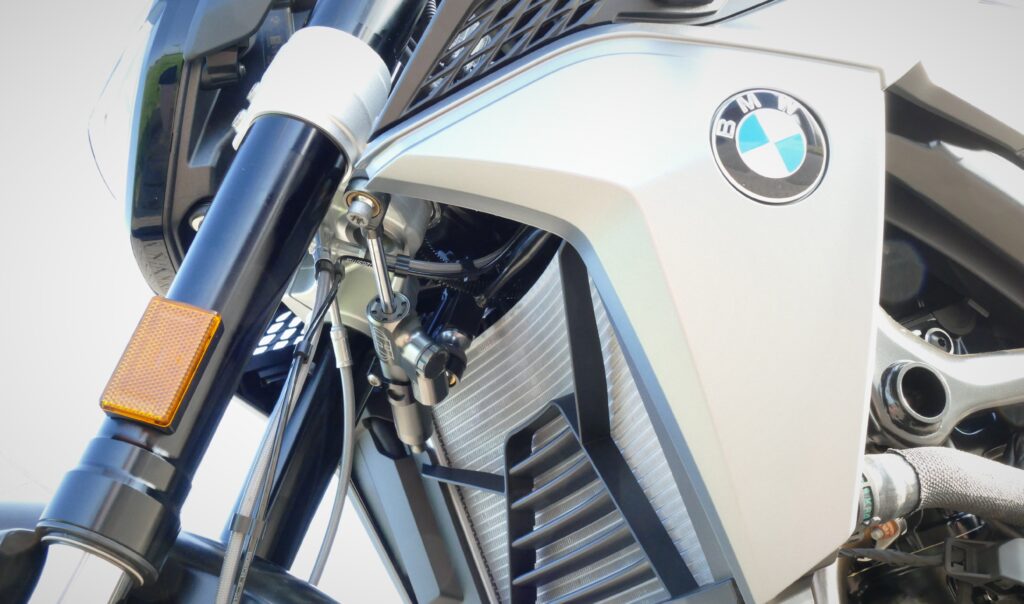
The best steering damper for touring motorcycles is one that offers progressive damping, wide adjustability, and a model-specific mounting solution designed for long-distance riding demands. For touring bikes, a reactive progressive damper outperforms a basic linear unit because it adapts its resistance to the speed and intensity of steering input, keeping the bike stable at highway speeds without fighting the rider at slower speeds. The sections below walk through everything you need to choose the right unit for your touring setup.
How does a steering damper improve touring motorcycle handling?
A steering damper improves touring motorcycle handling by absorbing unwanted oscillations in the steering head, preventing tank-slappers, wobbles, and vibration from destabilizing the bike. On a loaded touring motorcycle, these forces are amplified by extra weight, higher speeds, and longer distances, making a steering damper a genuinely important safety and comfort upgrade for serious touring riders.
When you load a touring bike with luggage, a passenger, or both, the front-end geometry shifts. The added mass increases the energy transmitted through the front wheel when you hit a road imperfection, a crosswind gust, or a sudden change in road surface. Without a damper, that energy can trigger a wobble that builds quickly. A steering damper dissipates that energy before it reaches a dangerous amplitude.
Beyond safety, a well-tuned steering damper reduces rider fatigue. Long-distance touring means hours in the saddle, and constant micro-corrections to compensate for front-end instability wear you down. A damper handles those micro-corrections passively, so your hands and arms arrive at your destination fresher.
Hyperpro
Ride with confidence
Find the nearest Hyperpro dealer and start your motorcycle upgrade.
What are the different types of steering dampers available?
There are two main types of steering dampers available for motorcycles: linear (constant) dampers and progressive (reactive) dampers. A linear damper applies the same level of resistance regardless of how fast or hard the steering moves. A progressive damper increases its resistance proportionally to the speed and force of the steering input, making it far more versatile for varied riding conditions.
Linear steering dampers
A linear damper delivers a fixed, consistent damping force across the full range of steering movement. This makes it straightforward to set up and effective at neutralizing steady-state wobbles. The trade-off is that the same resistance that stabilizes the bike at speed can feel stiff and intrusive during slow-speed maneuvers, parking, or tight U-turns.
Progressive steering dampers
A progressive damper uses a reactive internal valve system to vary resistance based on input speed. At slow speeds, the damper stays soft and unobtrusive. At higher speeds or during a sudden destabilizing event, it firms up rapidly to absorb the oscillation. This behavior makes progressive dampers the preferred choice for touring riders who regularly mix highway riding with urban navigation and campsite maneuvering.
Our steering damper range reflects this split directly: the CSC model uses constant linear damping, while the RSC model delivers reactive progressive damping, both adjustable across 22 positions to match your specific bike and riding style.
What should you look for when choosing a steering damper for touring?
When choosing a steering damper for touring, prioritize progressive damping behavior, a wide adjustment range, and a model-specific mounting kit. These three factors determine whether the damper actually improves your touring experience or simply adds weight and complexity to your setup.
- Damping type: Progressive damping suits touring better than linear because it stays unobtrusive at low speed and firms up when you need it most.
- Adjustability: A wide range of damping settings lets you tune the damper to your load, route, and riding style. Look for at least 20 adjustment positions.
- Fitment precision: A model-specific mounting kit eliminates guesswork and guarantees correct geometry. Avoid universal brackets that require drilling or cutting.
- Build quality: Touring puts high cumulative hours on components. CNC-milled aluminum mounts and a robust damper body hold up better over long distances than cast or generic alternatives.
- Ease of adjustment: You should be able to change the damping setting without tools, especially if you regularly switch between solo and two-up loaded touring.
Which steering dampers are best suited for long-distance touring?
For long-distance touring, progressive steering dampers with wide adjustability and model-specific mounting are best suited to the demands of the role. They handle the full spectrum of touring conditions, from motorway cruising at sustained speed to winding mountain passes and slow resort-town navigation, without requiring the rider to compromise in any one area.
The key reason progressive dampers outperform linear ones on long tours is adaptability. A multi-day tour takes you through changing road surfaces, varying loads as fuel burns off and luggage shifts, and different speeds across the same ride. A damper that adjusts its response to actual steering input handles all of those conditions more effectively than one locked to a fixed resistance value.
Mounting quality matters equally on long tours. A damper that flexes, shifts, or corrodes after a few thousand kilometers introduces new problems rather than solving existing ones. Model-specific mounts machined from solid aluminum maintain precise geometry throughout the life of the component.
Does a steering damper affect low-speed maneuverability on a touring bike?
A steering damper can affect low-speed maneuverability on a touring bike, but only if it uses linear damping set too firmly. A well-tuned progressive damper has minimal impact on low-speed handling because its resistance stays low when steering inputs are slow and gentle, which is exactly the condition during parking, U-turns, and slow traffic navigation.
This is one of the most common concerns riders raise before fitting a damper to a large touring bike. The worry is understandable: touring bikes are already heavy, and slow-speed handling takes real effort. Adding any resistance to the steering feels counterintuitive.
In practice, a properly adjusted progressive damper is nearly imperceptible at walking pace. The reactive valve only builds significant resistance when the steering moves quickly, which happens during a wobble or tank-slapper, not during a deliberate slow-speed turn. If you find your damper fighting you at low speed, the damping setting is likely too high for your current conditions and needs to be reduced.
When should you replace or upgrade your touring motorcycle’s steering damper?
You should replace your touring motorcycle’s steering damper when it shows signs of oil leakage, inconsistent damping, or physical damage to the body or mounts. You should consider upgrading if your current damper is a basic linear unit and you regularly tour with a load, a passenger, or across varied road surfaces where a progressive damper would deliver a meaningful improvement.
Specific signs that replacement is due include:
- Visible oil seeping from the damper body or around the shaft seal
- A noticeable difference in resistance between one direction of steering and the other
- A “dead” feeling where the damper no longer provides any resistance even at the firmest setting
- Cracked, bent, or corroded mounting hardware
- Renewed wobble or instability that the damper previously controlled
Upgrading rather than replacing makes sense when your bike came from the factory with a basic damper and your touring use has grown more demanding. If you have added luggage systems, started riding two-up regularly, or extended your trips from weekend runs to multi-week tours, the original-specification damper may simply not match your current needs. Exploring the full range of motorcycle suspension products available for your specific model is a practical starting point for identifying what upgrade makes the most sense.
How Hyperpro helps you find the right steering damper for touring
We design and manufacture steering dampers specifically for the demands of real-world motorcycle use, including long-distance touring. Our product line gives you a clear choice between two proven systems, both built with the adjustability and fitment precision that touring riders need.
- CSC (Constant Safety Control): A 22-position adjustable linear damper that delivers consistent, predictable damping across the full steering range. A solid choice for riders who want straightforward setup and reliable stability.
- RSC (Reactive Safety Control): A 22-position adjustable progressive damper that varies its resistance based on steering input speed. The preferred option for touring riders who need low-speed freedom and high-speed stability from the same component.
- Model-specific mounting kits: CNC-milled in Hyperpro Gold or Black, designed as plug-and-play fitments for your exact motorcycle. No drilling, no cutting, and no guesswork in 98% of applications.
Purchases are available through our authorized distributor network. Contact us if you have questions about fitment or which system suits your touring setup best, and we will point you to the right solution and the nearest dealer.